
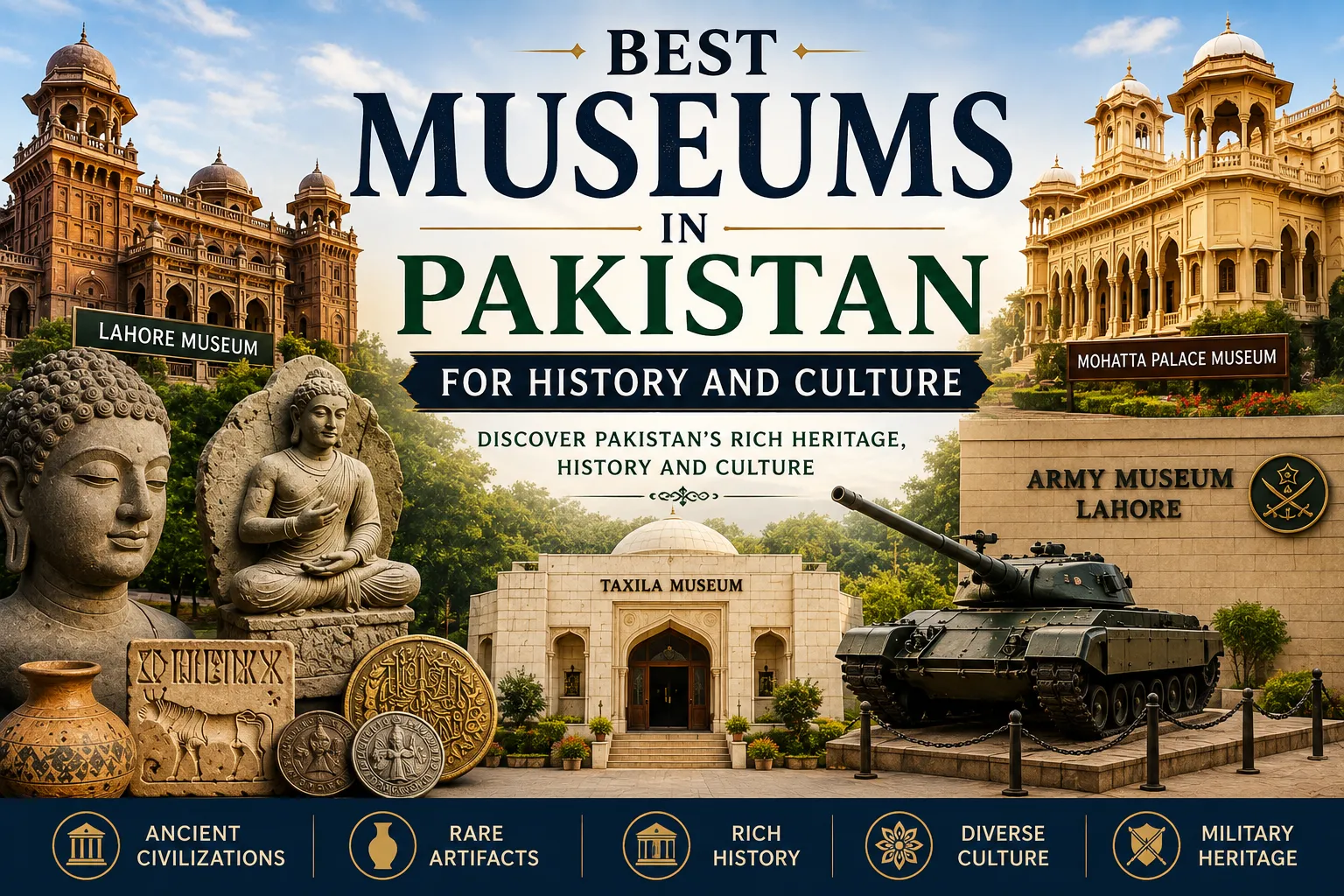
Pakistan’s history is not limited to a single period or civilization. For thousands of years, the region has been shaped by different peoples, cultures, religions, and ruling dynasties. The Indus Valley Civilization, Gandhara Civilization, Islamic dynasties, Mughal period, Sikh rule, and British colonial era have all contributed to the country’s rich historical and cultural landscape.
One of the best ways to understand this history is through museums. Instead of only reading about ancient civilizations and historical events, visitors can see objects that have survived from different periods. Ancient coins, sculptures, manuscripts, paintings, pottery, jewellery, clothing, weapons, and other artefacts make the past easier to understand.
For students, families, tourists, and history lovers, the best museums in Pakistan offer an opportunity to explore the country’s heritage while learning about the people and cultures that shaped it. Some museums focus on archaeology and ancient civilizations, while others explore national history, traditional culture, art, architecture, or military heritage.
If you are planning a cultural or heritage trip around Pakistan, these museums are worth considering as part of your itinerary. Why Visit Museums in Pakistan?
Museums are more than buildings filled with old objects. They preserve historical evidence and give visitors an opportunity to see, study, and understand the heritage of earlier generations.
For travelers, museums can provide a useful introduction to Pakistani history, culture, archaeology, and heritage before visiting historical sites themselves. Taxila Museum, for example, becomes much more meaningful when combined with the ancient archaeological sites of the Taxila Valley.
Other museums offer a completely different experience. Lok Virsa Heritage Museum in Islamabad focuses on folk heritage, traditional lifestyles, music, crafts, festivals, and the living traditions of communities from different parts of Pakistan.
Museums are also valuable for students because they allow them to see historical material rather than relying entirely on textbooks. For international visitors, they can provide useful context before exploring archaeological sites, historic buildings, and cultural destinations.
For anyone interested in historical museums in Pakistan or cultural museums in Pakistan, there is a wide range of experiences to explore.
Best Museums in Pakistan for History and Culture:
Lahore Museum
Lahore Museum is one of the country’s most important museums and one of the strongest choices for anyone interested in Pakistan’s history, archaeology, art, and culture.
Located on Shahrah-e-Quaid-e-Azam, formerly known as The Mall, the present museum building opened to the public in 1894. Its architecture reflects Indo-Saracenic influences, combining elements associated with Mughal and British colonial architecture.
Visitors can explore collections covering prehistoric and Indus history, Gandhara art, Hindu, Buddhist and Jain heritage, Islamic art, Sikh history, manuscripts, coins, miniature paintings, ethnology, the Pakistan Movement, and more.
One of its best-known objects is the Fasting Siddhartha, a significant example of Gandharan art. The museum is particularly useful for travelers who want to explore several periods of history in one place.
Best for: History lovers, students, archaeology enthusiasts, art lovers, and first-time visitors to Lahore.
Travel Tip: Combine a visit with Lahore Fort, Badshahi Mosque, and other historic attractions in and around the Walled City.
Visitor Information:
· Opening Hours: Verify current hours before visiting.
Weekly Closure: The first Monday of each month is reported as a closure day in current visitor listings.
Entry Fee: Check the latest official rate before travelling.
Photography: Follow the museum’s current photography rules.
Taxila Museum:
Taxila Museum is one of the most important archaeological museums in Pakistan and an excellent destination for anyone interested in Gandhara Civilization, Buddhism, and ancient history. The museum’s collection is closely connected with archaeological sites throughout the Taxila Valley, including Bhir Mound, Sirkap, Sirsukh, Dharmarajika, Mohra Moradu, Jaulian, and other sites. Visitors can see stone and stucco sculptures, Buddhist relics, stupas, relic caskets, inscriptions, jewellery, coins, tools, pottery, utensils, and household objects.
One of the museum’s greatest strengths is its connection with the archaeological landscape surrounding it. Visitors can examine artefacts inside the museum and then visit the ancient settlements and religious sites where many discoveries were made. The Taxila archaeological area was inscribed on the UNESCO World Heritage List in 1980, making the region particularly important for heritage tourism.
Best for: Archaeology enthusiasts, students, Gandhara art lovers, and travelers interested in ancient civilizations.
Travel Tip: Allow enough time for both the museum and the surrounding archaeological sites.
Visitor Information:
· Summer Timing: Around 8:30 AM–5:00 PM according to current visitor information.
Winter Timing: Around 9:00 AM–4:00 PM.
Regular Closure: Current visitor information reports the first Monday of each month as a closure day, along with Islamic holidays.
Entry Fee: Current listings report separate rates for local adults, children, and foreign visitors; verify the latest rate before travelling.
Important: Taxila’s timings can be seasonal, so visitors should confirm the schedule before setting out.
Peshawar Museum:
Peshawar Museum is another major destination for travelers interested in historical museums in Pakistan, particularly the history and art of Gandhara. The museum was established in 1907, and its historic building reflects the diverse cultural influences that have shaped the region.
The museum is particularly famous for its Buddhist and Gandharan material. Its wider collections include coins, manuscripts, weapons, clothing, jewellery, paintings, pottery, household objects, and handicrafts.
For travelers exploring Khyber Pakkhtunkhwa, the museum provides useful context for understanding the wider Gandhara heritage of the province.
Best for: Gandhara art, Buddhist heritage, archaeology, regional history, and architecture.
Visitor Information:
- Opening Hours: Check the museum’s official visitor information before travelling.
Weekly Closure: Verify before travelling.
Entry Fee: Verify the latest official rate.
Photography: Check museum rules before taking photographs.
National Museum of Pakistan:
The National Museum of Pakistan in Karachi provides a broad overview of the country’s archaeological, artistic, religious, and cultural heritage. The museum was established at Frere Hall in 1950 and later moved to its present location in Burns Garden in 1970. Its collections cover subjects including the Indus Civilization, Gandhara art, Islamic art, miniature paintings, ancient coins, manuscripts, and Pakistani cultural heritage.
The Ethnological Gallery presents aspects of the communities and cultures of Pakistan, while the museum’s archaeological collections include material associated with major historical sites. The museum also has a Quran Gallery containing Quranic manuscripts and copies. The National Museum is particularly useful for visitors who want a broad introduction to Pakistan’s archaeological and cultural heritage rather than focusing on one civilization.
Best for: Pakistani history, archaeology, Islamic heritage, manuscripts, art, and cultural collections.
Visitor Information:
- Opening Hours: Check the latest official visitor information before travelling.
Weekly Closure: Confirm the current weekly closure day before your visit.
Entry Fee: Verify the current admission rate.
Photography: Follow the rules for individual galleries and exhibits.
Update: The National Heritage and Culture Division reported the inauguration of a new Prehistoric Gallery at the National Museum Karachi in May 2026, so the museum continues to develop its displays.
Lok Virsa Heritage Museum:
Lok Virsa Heritage Museum offers a different experience from archaeological museums such as Taxiila Museum and Peshawar Museum. Located in Shakarparian, Islamabad, the museum focuses on the traditional culture and living heritage of Pakistan. It presents folk heritage, traditional lifestyles, music, crafts, festivals, clothing, and ethnographic displays representing communities from different parts of the country.
This makes Lok Virsa particularly useful for visitors who want to understand Pakistan beyond archaeological ruins and ancient monuments. Traditional crafts, clothing, music, and regional customs are an important part of the country’s cultural identity.
Best for: Culture lovers, families, students, photographers, and travelers interested in traditional Pakistani life.
Visitor Information
- Opening Hours: Current visitor information commonly lists Tuesday–Sunday opening, with Monday as the weekly closure. Some listings give 10:00 AM–4:00 PM, while other current listings give longer hours, so visitors should confirm before travelling.
Weekly Closure: Monday is commonly listed as the closure day.
Entry Fee: Check the current official rate.
Friday: Check the current schedule because Friday prayer breaks may affect visiting hours.
The National Heritage and Culture Division continues to hold exhibitions and cultural activities at Lok Virsa, so temporary displays may also change over time.
Pakistan Monument Museum:
Pakistan Monument Museum, located in the Shakarparian area of Islamabad, presents a historical narrative connected with the region, the Pakistan Movement, the creation of Pakistan, and major developments after independence. The museum includes dedicated Quaid-i-Azam and Allama Iqbal sections, along with photographs, archival material, manuscripts, and other historical displays.
For students studying PAKISTAN Studies, the museum can make historical subjects more tangible. Instead of relying entirely on textbooks, visitors can see photographs, documents, and other historical material. Its location also makes it convenient to combine the museum with the Pakistan Monument and other attractions in the Shakarparian area.
Best for: Students, families, national history, Pakistan Movement history, and visitors interested in the creation of Pakistan.
Visitor Information
- Opening Hours: Confirm current hours before visiting.
Weekly Closure: Historical visitor information has listed Monday as a closure day, with Tuesday–Sunday public opening.
Entry Fee: Check the latest official information.
Travel Tip: Visit the museum together with the Pakistan Monument for a more complete experience.
Mohatta Palace Museum;
Mohatta Palace Museum is one of Karachi’s most distinctive cultural and architectural attractions. Its importance comes not only from its exhibitions but also from the historic palace itself. The palace was built in 1927 as the seaside home of Rai Bahadur Seth Shivratan Mohatta and was designed by architect Ahmed Hussein Agha in a Mughal Revival style. After the creation of Pakistan, the government acquired the building in 1947. It later became associated with Mohtarma Fatima Jinnah before eventually becoming a museum.
Today, Mohatta Palace is a museum of the fine and decorative arts of Pakistan. Exhibitions explore artistic traditions through materials such as stone, metal, clay, wood, cloth, and paper. The palace itself is an important part of the experience. Its architecture, decorative details, and historical associations give visitors another way to understand Karachi’s cultural history.
Best for: Art lovers, architecture enthusiasts, history lovers, photographers, and cultural travelers.
Visitor Information
- Opening Hours: Current visitor listings report approximately 11:00 AM–6:00 PM.
Weekly Closure: Monday is commonly listed as the weekly closure day.
Entry Fee: Check the latest museum rate before visiting.
Photography: Check the current gallery-specific photography rules.
Army Museum Lahore:
Army Museum Lahore adds an important military history perspective to this list. While museums such as Taxila Museum and Lahore Museum focus heavily on archaeology, art, and ancient heritage, Army Museum Lahore explores military history and the development of the Pakistan Army.
Its displays cover a broad historical narrative. The History of Pakistan Gallery traces major political and military events, while the Shuhada Gallery commemorates Pakistan Army personnel who died in service after independence. For visitors interested in modern Pakistani history, the museum provides a different perspective from conventional archaeological museums.
Best for: Military history enthusiasts, students, families, and visitors interested in modern Pakistan.
Visitor Information
Summer: 16 April to 15 October
Tuesday–Sunday: 9:30 AM–6:00 PM
No entry after 5:30 PM
Winter: 16 October to 15 April:
Tuesday–Sunday: 9:00 AM–4:30 PM
No entry after 4:00 PM
Weekly Closure: Monday.
The museum also states that it closes on Eid-ul-Fitr, Eid-ul-Azha, Eid Milad-un-Nabi and 9th–10th Muharram.
General Ticket: Rs. 200
Children under 12: Rs. 100
Students: Rs. 100
Armed Forces: Rs. 100
All-inclusive package: Rates vary by category.
Visitor Tip: Flashlight and video making are not permitted inside the museum premises.
Harappa Museum:
For travelers interested in the Indus Valley Civilization, Harappa is an important destination. The Harapppa archaeological site near Sahiwal is one of the major sites associated with the Indus Valley Civilization. Archaeological investigations revealed evidence of an ancient urban settlement, including structures, pottery, jewellery, seals, and other objects.
A museum near the archaeological site displays selected artefacts recovered from Harappa. This makes the museum particularly useful when combined with a visit to the ruins themselves. Rather than simply reading about ancient urban life, visitors can see objects connected with the people who lived at Harappa thousands of years ago.
Best for: Ancient history, archaeology, Indus Valley Civilization, students, and heritage travelers.
Visitor Information
Opening Hours: Current official online visitor information is not sufficiently consistent to publish a fixed time confidently.
Weekly Closure: Confirm before visiting.
Entry Fee: Verify current admission rates.
Travel Tip: Visit the museum together with the archaeological site.
Swat Museum:
Swat Museum in Saidu Sharif offers another important window into Gandhara heritage and the archaeology of the Swat Valley. The museum houses archaeological objects reflecting the history of the region. Its collection includes Gandharan sculptures and objects connected with Buddhist heritage, while its ethnographic displays present local embroidery, carved wood, jewellery, weapons, and other aspects of Swati culture.
For visitors exploring Swat’s historical sites, the museum helps put the region’s archaeological discoveries into context. Nearby archaeological attractions such as Butkara can also be included in a heritage itinerary.
Best for: Gandhara history, Buddhist heritage, archaeology, regional culture, and students.
Visitor Information:
Opening Hours: Current visitor sources report approximately 9:00 AM–4:00 PM, although another current visitor source reports a split schedule with a Friday closure.
Weekly Closure: Verify before visiting because current online sources conflict.
Entry Fee: Verify the current official rate.
Travel Tip: Combine the museum with nearby archaeological sites such as Butkara.
11. Pakistan Air Force Musem:
The Pakistan Air Force Museum offers a different type of historical experience. Rather than focusing mainly on ancient civilizations, it preserves and presents the history of Pakistan’s aviation and air force. Located on Shahrah-e-Faisal in Karachi, the museum features outdoor aircraft displays, aviation equipment, galleries, historical objects, and material connected with Pakistan’s air force history.
For families and students, the museum can be an engaging way to explore modern military and aviation history.
Best for: Aviation enthusiasts, families, students, military history lovers, and visitors interested in modern Pakistan.
Visitor Information
Monday–Thursday: 9:00 AM–9:00 PM
Friday: 3:00 PM–10:00 PM
Saturday–Sunday: 9:00 AM–10:00 PM
Weekly Closure: None the official museum website states that it is open daily throughout the year.
Admission:
Adults: PKR 150
Children aged 3–12: PKR 50
Students: PKR 50
Senior citizens 60+: Free
People with disabilities: Free
Parking charges are separate.
Visitor Rules: Visitors should not touch aircraft or exhibits. The museum is smoke-free, and visitors are required to follow the museum’s dress and admission rules.
Best Museums in Pakistan by Interest
Different museums appeal to different travelers. Instead of choosing one museum as the absolute best, it is more useful to consider what you want to learn about.
Best Museum for Pakistani History
Lahore Museum is one of the strongest choices because its collections cover a wide range of historical and cultural periods.
Best Museum for Archaeology:
Taxila Museum is an excellent choice for archaeology because its collection is closely connected with excavated sites throughout the Taxila Valley.
Best Museums for Gandhara Art:
Taxila Museum, Peshawar Museum, and Swat Museum are particularly valuable for visitors interested in Gandharan and Buddhist art.
Best Museum for Pakistani Culture:
Lok Virsa Heritage Museum is the strongest choice for visitors interested in folk culture, traditional lifestyles, music, crafts, festivals, and regional traditions.
Best Museum for National History:
Pakistan Monument Museum is particularly suitable for visitors interested in the Pakistan Movement, national history, and the creation of Pakistan.
Best Museum for Military History:
Army Museum Lahore and PAF Museum Karachi offer different perspectives on Pakistan’s military history.
Best Museums in Pakistan by City
Museums in Lahore
Lahore is one of Pakistan’s strongest destinations for history and culture. Lahore Museum is the main choice for visitors interested in archaeology, Gandhara art, Islamic art, manuscripts, coins, and the broader history of the region.
Army Museum Lahore provides a different perspective through military history.
Museum visits can easily be combined with Lahore’s historic monuments and cultural attractions.
Museums in Islamabad:
Islamabad offers two particularly different museum experiences.
Lok Virsa Heritage Museum focuses on Pakistani folk culture and living traditions, while Pakistan Monumment Museum presents a stronger focus on national history and the Pakistan Movement.
Both are located in the Shakarparian area.
Museums in Karachi
Karachi has several important museums and cultural institutions.
For this guide, the National Museum of Pakistan, Mohatta Palace Museum, and PAF Museum offer three very different experiences: archaeology and national heritage, art and architecture, and aviation history.
Museums in Peshawar, Taxila and Swat
For travelers interested in Gandhara Civilization, Taxila, Peshawar, and Swat are particularly important destinations.
Taxila Museum is closely connected with the archaeological sites of the Taxila Valley, Peshawar Museum houses major Gandharan collections, and Swat Museum presents archaeological and cultural material from the Swat Valley.
Best Museums in Pakistan for History Lovers
History lovers have plenty of options, but the best museum depends on the period they want to explore.
· Lahore Museum provides a broad historical overview.
· Taxila Museum is particularly useful for ancient history and archaeology.
· Peshawar Museum and Swat Museum are important for Gandhara and Buddhist heritage.
· The National Museum of Pakistan brings together archaeological and cultural material from different periods, while Pakistan Monument Museum focuses more strongly on national history.
· Army Museum Lahore and PAF Museum Karachi provide additional perspectives on modern military history.
This variety is one of the strengths of museum tourism in Pakistan.
Best Museums in Pakistan for Culture Lovers:
Travelers interested in culture may prefer museums that show how people lived, created art, practiced traditions, and expressed their regional identities.
· Lok Virsa Heritage Museum is particularly useful because it focuses on folk heritage, traditional lifestyles, crafts, music, and regional traditions.
· Mohatta Palace Museum provides another perspective through fine and decorative arts, architecture, and cultural exhibitions.
· Meanwhile, Lahore Museum and the National Museum of Pakistan include important artistic and cultural collections alongside their archaeological material.
Together, these museums show that Pakistani heritage is not limited to ancient ruins. It also includes art, architecture, crafts, clothing, manuscripts, music, and traditions.
Best Museums in Pakistan for Students and Families:
Museums can be especially useful for students because they make historical subjects more visual and easier to rememmber.
· A student studying Gandhara history, for example, can better understand the subject by seeing Buddhist sculptures at Taxila Museum or Peshawar Museum.
· Someone studying Pakistani culture can learn more from the displays at Lok Virsa, while students interested in national history can explore the material presented at Pakistan Monument Museum.
· Families can also enjoy museum visits as educational activities that combine learning with sightseeing.
· PAF Museum can be particularly appealing to younger visitors because of its aircraft and outdoor displays.
Before visiting, however, it is always sensible to check current visitor information, opening hours, admission fees, and photography rules.
Museums Near Pakistan’s Famous Historical Sites
One of the best ways to experience heritage tourism in Pakistan is to combine museums with the historical sites around them.
Taxila Museum (Taxila Archaeological Sites):
· Taxila Museum is surrounded by important archaeological sites, including Bhir Mound, Sirkap, Sirsukh, Dharmarajika, Mohra Moradu, and Jaulian.
Visiting the museum before exploring the ruins can help visitors understand what they are seeing.
Harappa Museum (Harappa Archaeological Site):
· The Harappa Museum is particularly useful when combined with the archaeological remains of the ancient city.
Visitors can connect the artefacts displayed in the museum with the settlement where they were discovered.
Lahore Museum (Lahore’s Historic Attractions):
· Visitors to Lahore can combine Lahore Museum with Lahore Fort, Badshahi Mosque, the Walled City, and other historic landmarks.
Peshawar Museum (Gandhara Heritage):
· Peshawar Museum can form part of a wider journey through the Gandhara heritage of Khyber Pakhtunkhwa.
Lok Virsa and Pakistan Monument Museum (Islamabad Cultural Attractions):
· Both museums are in the Shakarparian area, making them practical additions to an Islamabad cultural itinerary.
Mohatta Palace and National Museum (Karachi Heritage):
· Karachi visitors can combine these museums with the city’s historic buildings, cultural attractions, and heritage sites.
Tips for Visiting Museums in Pakistan
A little planning can make a museum visit more enjoyable.
- Check opening hours before travelling. Museum schedules can change.
- Check admission fees in advance. Fees can vary for adults, students, children, and international visiitors.
- Check weekly closure days. Some museums close on Mondays, while others may follow different schedules.
- Allow enough time. Large collections can take several hours to explore properly.
- Follow photography rules. Some museums restrict photography, flash, or video recording.
- Read exhibit information. Understanding the background of an object often makes the visit more interesting.
- Consider a guide where available. A knowledgeable guide can be particularly helpful at archaeological museums such as Taxila.
- Combine museums with nearby attractions. This works especially well in Lahore, Taxila, Islamabad, Peshawar, Swat, and Karachi.
- Respect historical objects. Many artefacts are fragile and cannot be replaced.
- Check official websites before travelling. Current information should always be confirmed before your trip.
Note: Museum timings, admission fees, and holiday closures may change. Check the museum’s official website or contact the museum before travelling.
Frequently Asked Questions About Museums in Pakistan
What is the best museum in Pakistan?
There is no single answer because it depends on what you want to see. Lahore Museum is a strong all-round choice for history and culture, while Taxila Museum is particularly suitable for archaeology and Gandhara heritage. Lok Virsa is a better choice for visitors interested in traditional Pakistani culture.
Which museum is best for Pakistani history?
Lahore Museum is one of the strongest choices because its collections cover a wide range of historical and cultural periods.
Which museum is famous for Gandhara art?
Taxila Museum, Peshawar Museum, and Swat Museum are particularly important for visitors interested in Gandharan and Buddhist art.
Where can I see ancient artefacts in Pakistan?
Taxila Museum, Lahore Museum, Peshawar Museum, Harappa Museum, and the National Museum of Pakistan are among the important museums where visitors can explore archaeological material from different periods of Pakistan’s history.
What is the best museum for Pakistani culture?
Lok Virsa Heritage Museum in Islamabad is one of the best choices for visitors interested in Pakistani folk traditions, crafts, music, festivals, traditional lifestyles, and regional cultures.
What are the best museums in Lahore?
Lahore Museum is the main choice for visitors interested in archaeology, history, art, and cultural heritage. Army Museum Lahore is another option for visitors interested in military history and modern national heritage.
What are the best museums in Islamabad?
Lok Virsa Heritage Museum and Pakistan Monument Museum are two useful choices for travelers interested in Pakistani culture and national history.
What are the best museums in Karachi?
The National Museum of Pakistan and Mohatta Palace Museum are two notable options, while PAF Museum provides a different experience focused on aviation and military history.
Are museums in Pakistan good for students?
Yes. Museums allow students to encounter historical objects, photographs, sculptures, manuscripts, and other material directly. They can be especially useful for subjects related to archaeology, Pakistan Studies, art, history, and cultural heritage.
Conclusion:
Pakistan’s museums offer much more than collections of old objects. They provide an opportunity to explore the civilizations, traditions, art, and historical events that have shaped the country over centuries. From the extensive collections of Lahore Museum to the ancient Gandharan heritage preserved at Taxila Museum, Peshawar Museum, and Swat Museum, each institution offers a different way to understand Pakistan’s past. The National Museum of Pakistan brings together archaeological and cultural collections from across the country, while Lok Virsa Heritage Museum highlights Pakistan’s living traditions, crafts, music, and regional cultures. For visitors interested in national history, the Pakistan Monument Museum provides insight into the Pakistan Movement and the country’s journey since independence.
Mohatta Palace Museum adds an artistic and architectural perspective, while Army Museum Lahore and PAF Museum Karachi offer different views of Pakistan’s modern military history. For travelers, these museums can be more than individual sightseeing stops. They can become part of a wider journey through Pakistan’s archaeological sites, historic cities, architecture, art, and cultural traditions. If you are planning a heritage-focused journey, exploring some of the best museums in Pakistan for history and culture is a worthwhile addition to your itinerary. Seeing original artefacts, artworks, manuscripts, and historical objects in person can bring Pakistan’s past to life and create a deeper appreciation for the country’s diverse heritage.