Pakistan is blessed with an incredible variety of natural landscapes. From the snow-covered peaks of the Karakoram and Himalayan ranges to coastal cliffs, forests, alpine meadows, deserts, and vast plains, the country offers something for almost every nature lover.
This geographical diversity has also created a wide range of habitats for plants, birds, and wildlife. Pakistan’s national parks play an important role in protecting these natural environments while giving travellers opportunities to experience the country’s landscapes and wildlife up close.
Some national parks are relatively easy to reach, while others are located in remote mountain or coastal areas and require careful planning. Choosing the right destination, checking road conditions, carrying essential supplies, and understanding local conditions can make a national park trip much more enjoyable.
What Are National Parks in Pakistan?
National parks are protected natural areas established to conserve important ecosystems, landscapes, wildlife, and plant species. Pakistan’s protected-area system also includes wildlife sanctuaries, game reserves, and other conservation areas.
National parks are important not only for wildlife conservation but also for protecting natural landscapes and maintaining ecological systems. They also provide opportunities for travellers to enjoy activities such as hiking, trekking, photography, sightseeing, and wildlife watching.
The country’s national parks cover a wide range of environments. Some are surrounded by high mountains and glaciers, while others include forests, alpine plains, valleys, wetlands, and coastal landscapes.
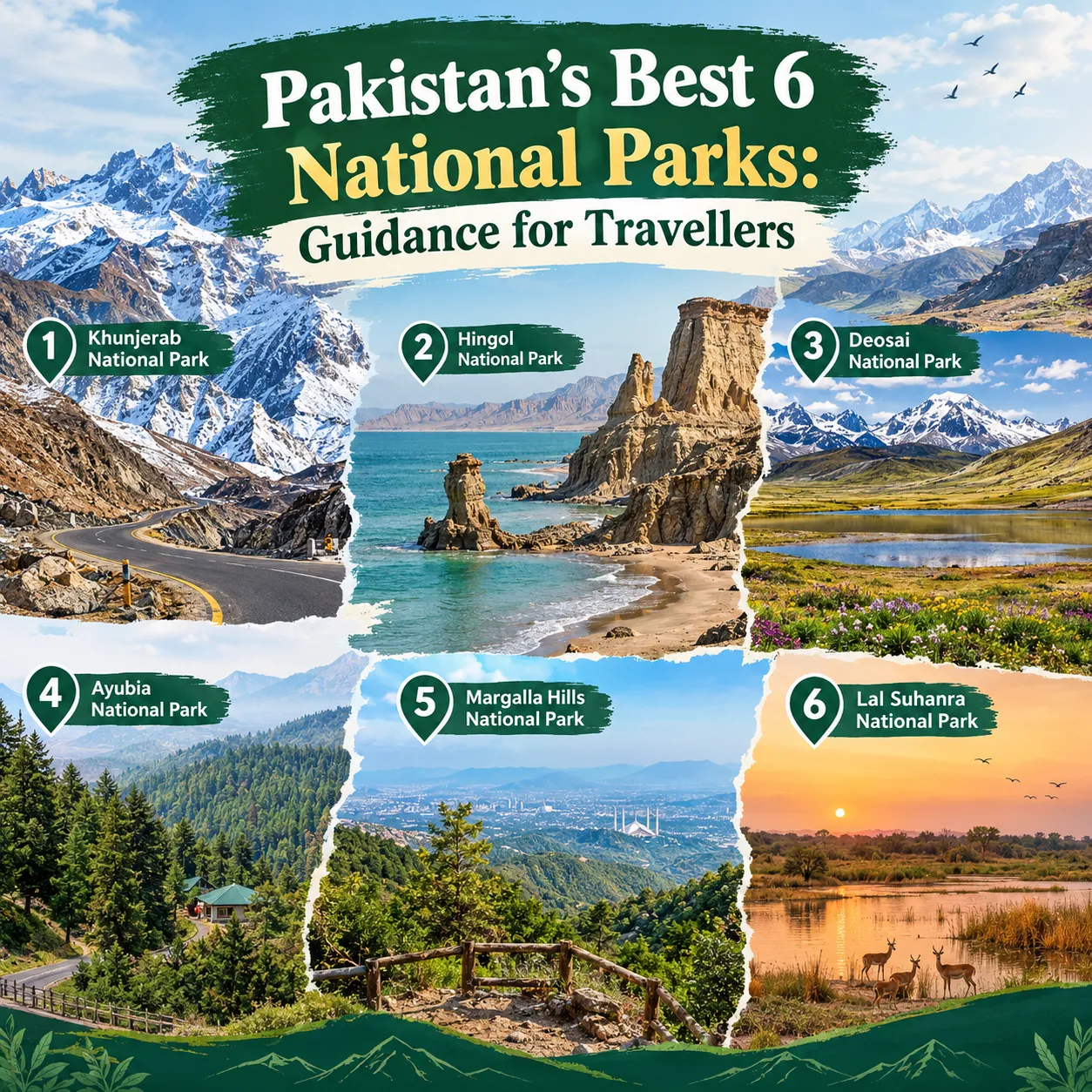
Quick Comparison of Pakistan’s 6 National Parks
| National Park | Location | Main Highlights | Best For |
|---|---|---|---|
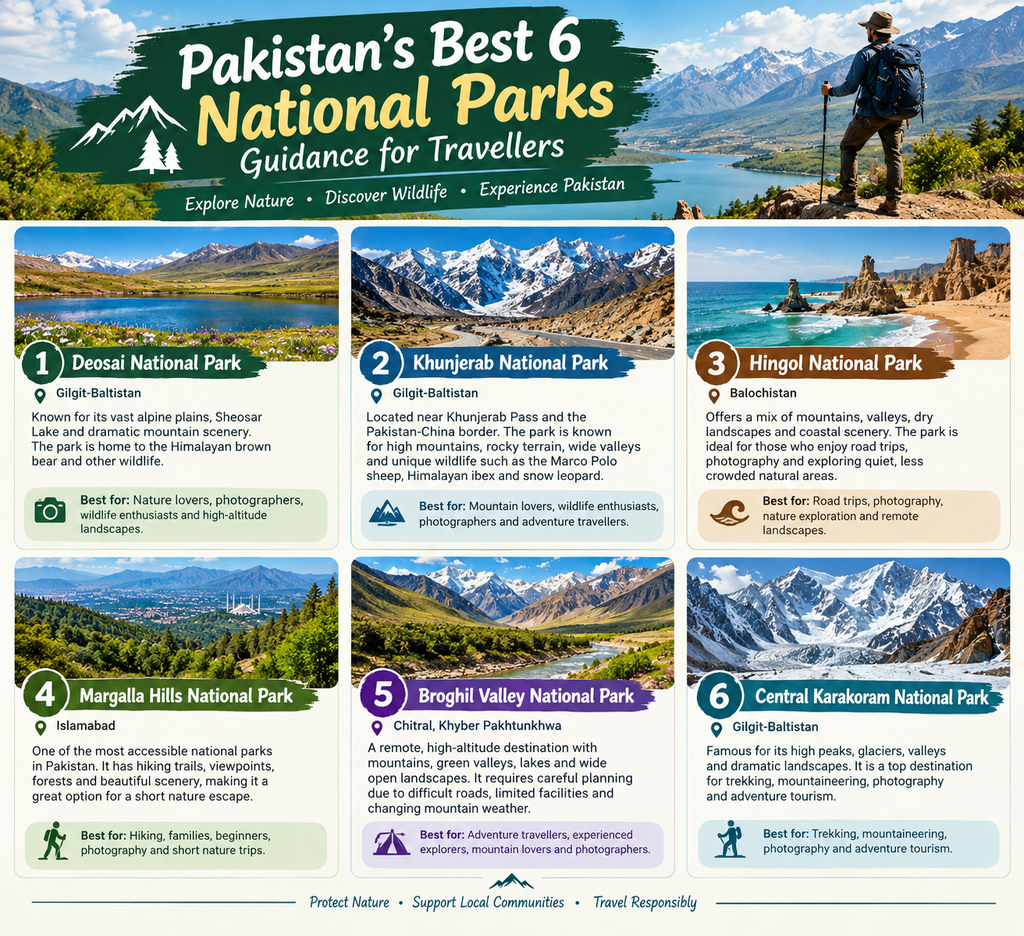
| Deosai National Park | Gilgit-Baltistan | Alpine plains, Sheosar Lake, mountains, wildlife | Nature lovers, photographers, wildlife enthusiasts |
| Khunjerab National Park | Gilgit-Baltistan | High mountains, valleys, Marco Polo sheep, ibex | Mountain scenery, wildlife, road trips |
| Hingol National Park | Balochistan | Coastal landscapes, mountains, valleys, dry terrain | Road trips, photography, nature exploration |
| Margalla Hills National Park | Islamabad | Hiking trails, viewpoints, forests, city views | Hiking, families, short nature trips |
| Broghil Valley National Park | Chitral, Khyber Pakhtunkhwa | High-altitude valleys, lakes, mountains | Adventure travellers, remote exploration |
| Central Karakoram National Park | Gilgit-Baltistan | High peaks, glaciers, valleys, trekking routes | Trekking, mountaineering, photography |
List of the Best National Parks in Pakistan
1. Deosai National Park
Deosai National Park is one of the most spectacular high-altitude destinations in Pakistan. It is located between Skardu and Astore in Gilgit-Baltistan and is known for its vast alpine plains and dramatic mountain scenery.
The landscape changes considerably with the seasons. During summer, the grasslands become greener and colourful wildflowers appear across the plains, creating a beautiful setting for photography and sightseeing.
One of the most famous attractions in the area is Sheosar Lake, surrounded by open landscapes, mountains, streams, and alpine scenery.
The park is also associated with the Himalayan brown bear and other wildlife. Visitors should remember, however, that seeing wild animals is never guaranteed.
Best for: Nature lovers, photographers, wildlife enthusiasts, and travellers interested in high-altitude landscapes.
2. Khunjerab National Park
Khunjerab National Park is located in the far north of Pakistan in the Karakoram region. It lies close to the famous Khunjerab Pass and the Pakistan-China border.
The park is known for its dramatic high mountains, rocky terrain, wide valleys, and high-altitude environment. The landscape is very different from the greener areas of northern Pakistan, with vast mountain scenery stretching along the journey.
Wildlife associated with the region includes the Marco Polo sheep, Himalayan ibex, and snow leopard.
For many travellers, the journey to Khunjerab is an important part of the experience. The route offers views of enormous mountains, dry slopes, and high valleys.
Because of its remote location and altitude, travellers should plan carefully and check road and weather conditions before starting their journey.
Best for: Mountain lovers, wildlife enthusiasts, photographers, and adventure travellers.
3. Hingol National Park
Located in the Makran coastal region of Balochistan, Hingol National Park offers a completely different experience from Pakistan’s northern mountain parks.
It is known for its combination of mountains, valleys, dry landscapes, and coastal scenery. The variety of landscapes makes Hingol an interesting destination for photographers, nature lovers, and travellers who enjoy long road trips.
The park is also suitable for visitors who want to explore quieter and less crowded natural areas. However, its remote location means that preparation is particularly important.
Travellers should carry enough fuel, food, and drinking water, especially when travelling through areas where facilities may be limited.
Best for: Road trips, photography, nature exploration, and travellers looking for remote landscapes.
4. Margalla Hills National Park
Margalla Hills National Park is one of the most accessible national parks in Pakistan. Located next to Islamabad, it provides an easy opportunity to enjoy nature without travelling far from the city.
The park has several hiking trails with different levels of difficulty. Some routes are suitable for beginners, while others require more energy and preparation.
The hills also provide beautiful viewpoints over Islamabad and the surrounding landscape. Because of its accessibility, Margalla Hills is suitable for both experienced hikers and visitors who simply want to spend a few hours outdoors.
It can also be a good option for families and travellers looking for a short nature escape during their stay in Islamabad.
Best for: Hiking, families, beginners, photography, and short nature trips.
5. Broghil Valley National Park
Broghil Valley National Park is a remote, high-altitude destination in the Chitral region of Khyber Pakhtunkhwa. The area is known for its mountains, green valleys, lakes, and wide open landscapes.
Its remote character makes it appealing to travellers who enjoy less-developed destinations and adventurous journeys. However, the same remoteness means that visitors need to prepare carefully.
Roads can be difficult, facilities may be limited, and mountain weather can change quickly. Travellers should arrange suitable transport, food, supplies, and local guidance before beginning the journey.
Broghil is not a destination where visitors should travel without proper planning and preparation.
Best for: Adventure travellers, experienced explorers, mountain lovers, and photographers.
6. Central Karakoram National Park
Central Karakoram National Park is located in the Karakoram region of Gilgit-Baltistan and is known for its impressive mountain scenery.
The park includes high peaks, glaciers, valleys, and some of the most dramatic landscapes in northern Pakistan. These surroundings make it particularly attractive to people interested in trekking, mountaineering, photography, and adventure tourism.
Travellers can experience huge mountain peaks, glaciers, and deep valleys while exploring the wider Karakoram region.
Because many areas are mountainous and remote, proper preparation is important. Travellers should consider their experience level, transport arrangements, weather conditions, and local guidance before planning more challenging activities.
Best for: Trekking, mountaineering, photography, and adventure tourism.
Best Things to Do in Pakistan’s National Parks
The activities available in Pakistan’s national parks depend on the location, weather, terrain, and rules of each park. Some experiences are suitable for families and casual travellers, while others require greater physical preparation.
Hiking and Trekking
Hiking and trekking are among the most popular activities. Margalla Hills offers accessible trails near Islamabad, while the northern parks provide more demanding mountain experiences.
Always choose a route according to your fitness level and experience.
Wildlife Watching
Pakistan’s national parks provide habitats for a variety of wildlife. Depending on the location, travellers may have opportunities to see animals such as markhor, Himalayan ibex, brown bears, and Marco Polo sheep.
Wildlife sightings are never guaranteed, so visitors should enjoy the natural environment without disturbing animals.
Photography
From alpine lakes and snow-covered peaks to forests, deserts, valleys, and coastal landscapes, Pakistan’s national parks offer plenty of opportunities for photography.
Early mornings and late afternoons can be particularly enjoyable for landscape photography because of the changing light and atmosphere.
Camping
Camping may be possible in some parks and surrounding areas. Before setting up a camp, always check the current rules and use permitted locations.
Most importantly, take all rubbish with you and avoid leaving any waste behind.
Nature Walks and Birdwatching
Not every visitor wants to take part in difficult hikes. Nature walks, birdwatching, and general sightseeing can be good alternatives for families and travellers looking for a more relaxed experience.
Best Time to Visit National Parks in Pakistan
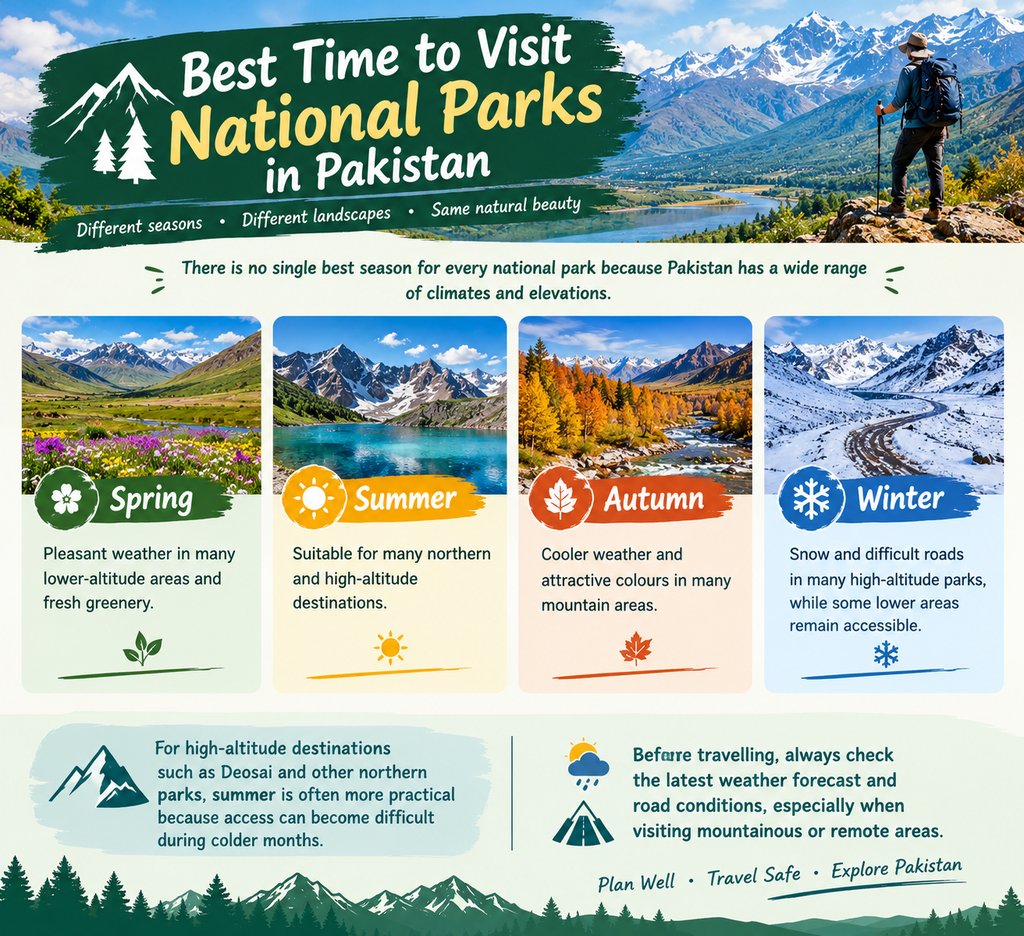
There is no single best season for every national park because Pakistan has a wide range of climates and elevations.
| Season | What to Expect |
|---|---|
| Spring | Pleasant weather in many lower-altitude areas and fresh greenery |
| Summer | Suitable for many northern and high-altitude destinations |
| Autumn | Cooler weather and attractive colours in many mountain areas |
| Winter | Snow and difficult roads in many high-altitude parks, while some lower areas remain accessible |
For high-altitude destinations such as Deosai and other northern parks, summer is often more practical because access can become difficult during colder months.
Before travelling, always check the latest weather forecast and road conditions, especially when visiting mountainous or remote areas.
How to Plan a National Park Trip
The first step is to choose a park according to your interests, travel experience, and available time.
If you want an accessible nature trip or an easy hiking experience, Margalla Hills National Park can be a convenient option. Travellers interested in high mountains and wildlife may prefer destinations such as Deosai or Khunjerab.
Transportation is another important part of planning. Some parks can be reached relatively easily by car, while remote mountain destinations may require a 4×4 vehicle or local transport.
Weather conditions can also affect travel plans. Rain, snowfall, landslides, and other conditions may affect mountain roads, so check the situation before leaving.
When travelling to remote areas, carry enough:
- Drinking water
- Food and snacks
- Fuel where necessary
- Basic medicines
- Suitable clothing
- Comfortable walking shoes
- Navigation or communication essentials
It is also important to check current entry requirements, permits, and fees before travelling because these can vary between destinations.
Wildlife in Pakistan’s National Parks
Pakistan’s national parks provide important habitats for many species of animals and birds. The northern mountain regions are particularly important for wildlife.
Some species associated with Pakistan’s mountain environments include:
- Snow leopard
- Markhor
- Himalayan ibex
- Himalayan brown bear
- Marco Polo sheep
Birds are also an important part of the country’s natural environment. Forests, mountains, wetlands, and other habitats provide shelter and feeding areas for resident and migratory birds.
The purpose of protected areas is to allow wildlife to live in its natural environment. Visitors should observe animals from a safe distance and avoid actions that could disturb them.
Responsible Tourism and Conservation
National park tourism can help people appreciate Pakistan’s natural heritage, but responsible behaviour is essential for protecting these places.
The simplest rule is: do not leave rubbish behind.
Plastic bottles, food packaging, and other waste can damage the environment and create risks for wildlife. Visitors should carry their waste with them and dispose of it properly.
Travellers should also avoid damaging trees, plants, and other natural features. Do not break branches or collect plants as souvenirs.
Wild animals should never be fed. Feeding wildlife can affect natural behaviour and may create problems for both animals and visitors.
Respecting local communities and their culture is equally important. Many national parks are located near communities that have lived in these regions for generations.
Where possible, travellers can support local communities by hiring local guides, staying at local accommodation, and purchasing products from local businesses.
Responsible tourism can help keep Pakistan’s national parks beautiful and protected for future generations.
National Park Travel Safety Tips
Safety should always be part of your travel plans when visiting a national park.
Before starting your journey:
- Check the weather and road conditions.
- Carry enough water and food.
- Take basic medicines and a first-aid kit.
- Wear suitable walking or hiking shoes.
- Prepare properly for high-altitude destinations.
- Avoid travelling alone in very remote areas if you lack experience.
- Consider hiring a local guide where appropriate.
- Follow instructions from park authorities and local guides.
High-altitude destinations require additional care. Travellers who are not accustomed to high elevations may experience difficulties, so it is important to rest properly and take any serious symptoms seriously.
Which National Park Should You Visit?
Your choice depends largely on the type of experience you are looking for.
| If You Want | Consider |
|---|---|
| Easy hiking near a major city | Margalla Hills National Park |
| Alpine landscapes and lakes | Deosai National Park |
| High mountains and wildlife | Khunjerab National Park |
| Coastal scenery and road trips | Hingol National Park |
| Remote mountain adventure | Broghil Valley National Park |
| Trekking and dramatic Karakoram scenery | Central Karakoram National Park |
Rather than trying to visit several remote parks in one trip, it is usually more practical to choose destinations that fit your route, available time, transport, and travel experience.
Frequently Asked Questions
What is the most famous national park in Pakistan?
Pakistan has many well-known national parks. Deosai is known for its high-altitude plains and association with the Himalayan brown bear, while Khunjerab is known for its high mountains, wildlife, and location near Khunjerab Pass.
Which national park is best for wildlife?
Deosai, Khunjerab, and other northern protected areas are popular with travellers interested in wildlife. However, sightings depend on the season, location, weather, and luck.
Which national park is best for hiking?
Margalla Hills National Park is a convenient choice for hiking because it has several trails and is easily accessible from Islamabad. Other mountain parks can offer more demanding trekking experiences.
What is the best time to visit national parks in Pakistan?
The ideal time depends on the park. Spring and autumn can be comfortable for many areas, while summer is generally more suitable for several high-altitude northern destinations.
Can you camp in Pakistan’s national parks?
Camping may be possible in some parks and nearby areas, but travellers should check the current rules before setting up a camp. Always use permitted areas and take all waste with you.
Are all national parks open throughout the year?
No. Access to some high-altitude parks can become difficult during winter because of snow and poor road conditions. Always check current weather, road access, and local travel information before visiting.
Conclusion
Pakistan’s national parks showcase an impressive variety of landscapes, from the high mountains of Gilgit-Baltistan to the forests of Khyber Pakhtunkhwa and the coastal scenery of Balochistan.
Whether you are interested in wildlife, hiking, photography, mountains, road trips, or peaceful nature experiences, there are national parks offering different types of adventures.
The key to a successful trip is preparation. Check the weather, road conditions, transportation, entry requirements, and local rules before travelling, particularly when visiting remote areas.
Most importantly, travel responsibly. Do not leave rubbish, disturb wildlife, or damage plants and natural features. By respecting nature and local communities, travellers can help protect Pakistan’s national parks and enjoy their beauty for years to come.