Northern Pakistan Travel Guide: Places to Visit, Things to do & Travel Tips
Northern Pakistan is where the Karakoram, Himalaya and Hindu Kush ranges meet, within a few days’ drive of one another. This northern Pakistan travel guide covers the northern areas of Pakistan, from Hunza and Skardu to Naran, Swat, Chitral and Neelum Valley.
Travellers come for snow peaks, turquoise lakes, orchard valleys, ancient forts, living mountain cultures and some of the world’s great road trips. Use it to shortlist places to visit in northern Pakistan, choose the right season, compare itineraries and costs, and prepare safely. It is written for first-time visitors, families, couples, solo travellers and adventure seekers, and it links to a detailed guide for each destination.
| Quick answer The best time for most of northern Pakistan is June to September, with autumn colour in October. Plan 7 to 10 days for Hunza and Skardu together, or 3 to 5 days for Naran-Kaghan or Swat. Most trips start from Islamabad, and the Karakoram Highway links the main valleys. Always check weather, road and entry conditions before you go, because mountain routes close and reopen with the seasons. |
Northern Pakistan at a Glance
Here is the big picture before we look at individual destinations.
| Quick fact | Detail |
|---|---|
| Main regions | Gilgit-Baltistan; northern Khyber Pakhtunkhwa (Swat, Kaghan, Chitral); Neelum Valley in Azad Kashmir |
| Mountain ranges | Karakoram, Himalaya and Hindu Kush |
| Famous peaks | K2 (about 8,611 m), Nanga Parbat (8,126 m), Rakaposhi (7,788 m), Tirich Mir (7,708 m) |
| Main road | Karakoram Highway (N-35) from Islamabad to Hunza and Khunjerab Pass |
| Main gateways | Islamabad by road or air; flights also serve Skardu and Gilgit |
| Peak season | June to September for high routes; April for lower valleys and blossom; October for autumn colour |
| Typical altitudes | From valley towns around 1,500 m to passes above 4,000 m (Khunjerab is about 4,700 m) |
What Is Northern Pakistan?
Northern Pakistan is the mountain belt across the top of the country. There is no single official boundary. Until 2009 Gilgit-Baltistan was officially called the Northern Areas, and many people still use “northern areas of Pakistan” to mean Gilgit-Baltistan: Hunza, Skardu, Gilgit, Astore, Ghizer and Diamer.
Travel guides and tour operators use the phrase more widely. They also include the northern mountain districts of Khyber Pakhtunkhwa, such as Swat, Kaghan and Chitral, and the Neelum Valley in Azad Kashmir. This guide uses that broader, traveller-friendly definition.
Why Visit Northern Pakistan?
- Mountains: Pakistan is home to five of the world’s fourteen 8,000-metre peaks, including K2 and Nanga Parbat.
- Valleys: Hunza, Shigar, Kaghan, Swat, Neelum and the Kalash valleys each have a distinct character.
- Lakes: Attabad, Saiful Muluk, Upper Kachura, Lulusar and Ratti Gali are among the best known.
- Rivers: The Indus, Hunza, Swat, Kunhar and Neelum rivers run beside many of the main roads.
- Glaciers: Passu, Batura and Raikot glaciers can be seen from viewpoints or short walks, and the Karakoram holds some of the largest glaciers outside the polar regions.
- Forts: Baltit, Altit, Shigar, Khaplu and Chitral preserve centuries of mountain history.
- Local culture: Communities speak Burushaski, Balti, Shina, Khowar and Kalasha, among other languages, and mountain hospitality is a highlight in itself.
- Hiking and camping: Trails range from easy lake walks to high-altitude treks with expert support.
- Photography: Golden-hour light, reflections, orchards in blossom and autumn colour reward early starts.
- Road trips: The Karakoram Highway ranks among the world’s great mountain drives.
Which Areas Are Considered Northern Pakistan?
| Area | Region | Known for |
|---|---|---|
| Gilgit-Baltistan | Administrative region | Hunza, Skardu, Gilgit, Astore, Fairy Meadows, Deosai, Khunjerab |
| Khyber Pakhtunkhwa mountain regions | Province (north) | Swat, Kaghan and Naran, Chitral, Kohistan, Upper Dir |
| Azad Kashmir mountain areas | Administered territory | Neelum Valley, Muzaffarabad, Ratti Gali |
| Chitral | Khyber Pakhtunkhwa | Kalash valleys, Shandur Pass, Chitral Fort, Tirich Mir |
| Hunza | Gilgit-Baltistan | Karimabad, Baltit and Altit forts, Attabad Lake, Passu |
| Skardu | Gilgit-Baltistan | Kachura lakes, Katpana Desert, Shigar, Deosai |
| Gilgit | Gilgit-Baltistan | Regional hub, Naltar Valley, Kargah Buddha |
| Naran and Kaghan | Khyber Pakhtunkhwa | Saiful Muluk, Babusar Pass, Lulusar, Shogran |
| Swat | Khyber Pakhtunkhwa | Kalam, Malam Jabba, Mingora, Swat River |
| Neelum Valley | Azad Kashmir | Keran, Sharda, Kel, Arang Kel |
Best Places to Visit in Northern Pakistan
Each destination below gets a short overview and a link to a detailed guide. Use the table to compare them quickly.
| Destination | Approx. altitude | Best for | Time needed |
|---|---|---|---|
| Hunza | Karimabad about 2,600 m | Culture, forts, orchards, lakes | 3 to 4 days |
| Skardu | City about 2,200 m; Deosai about 4,100 m | Lakes, cold desert, high plateau, trek access | 3 to 5 days |
| Naran and Kaghan | Naran about 2,500 m | Lakes and easy access from Islamabad | 2 to 3 days |
| Swat | Varies from valley floor to upper valleys | Green valleys, rivers, snow, heritage | 3 to 4 days |
| Gilgit | About 1,500 m | Gateway town, Naltar Valley | 1 to 2 days |
| Chitral | River-valley town; Shandur about 3,700 m | Kalash culture, festivals, forts | 4 to 6 days |
| Neelum Valley | About 1,500 to 2,600 m | River valley, villages, hiking | 3 to 4 days |
| Ratti Gali Lake | About 3,700 m | Alpine lake trek | Day trip from Neelum |
| Fairy Meadows | About 3,300 m | Nanga Parbat views, camping | 2 days |
Hunza Valley
Hunza is the classic first choice. The valley follows the Karakoram Highway beneath Rakaposhi and Ultar, with terraced orchards that turn blossom-white in spring and gold in autumn. Karimabad (about 2,600 m) is the main base, overlooked by Baltit Fort, with Altit Fort and its old village a short drive away. For sunrise, many visitors head to the Eagle’s Nest viewpoint above Duikar.
Further north, Attabad Lake, created when a 2010 landslide blocked the Hunza River, glows turquoise. Passu offers the jagged Passu Cones and glacier views, and the Hussaini suspension bridge is a famous photo stop that should be crossed with care. Hunza is also known for its warm hospitality and food such as chapshuro, walnut cake and dried apricots.
Best for: first-time visitors, culture, photography, couples and families. Suggested time: 3 to 4 days.
Skardu
Skardu is the gateway to Baltistan, where the Indus opens into a wide valley ringed by peaks. Highlights include Upper Kachura Lake, Lower Kachura Lake with the Shangrila resort, the dunes of Katpana Cold Desert against snow mountains, and Satpara Lake. Shigar, with its heritage fort, and Khaplu lie further out and make rewarding day trips or overnight stops.
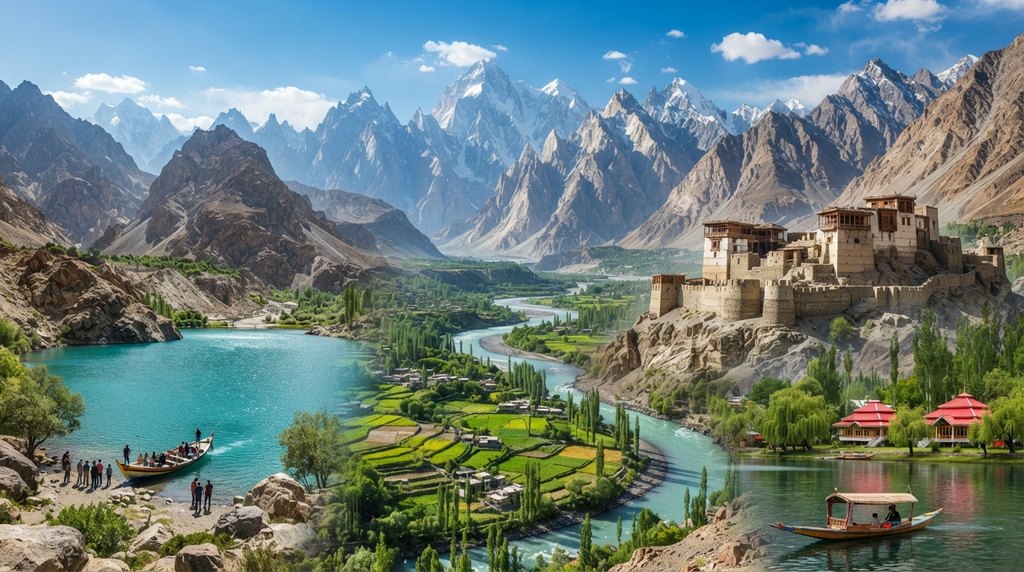
In summer the high plateau of Deosai, at an average of about 4,100 m, is the star attraction. Skardu is also the starting point for K2 and Baltoro expeditions. You can fly from Islamabad in about an hour when weather permits, or drive: the road from Mansehra on the Karakoram Highway to Chilas and onward to Skardu is long and best split over two days.
Best for: lakes, deserts, high plateaus and trek access. Suggested time: 3 to 5 days.
Read more: Skardu travel guide
Naran and Kaghan Valley
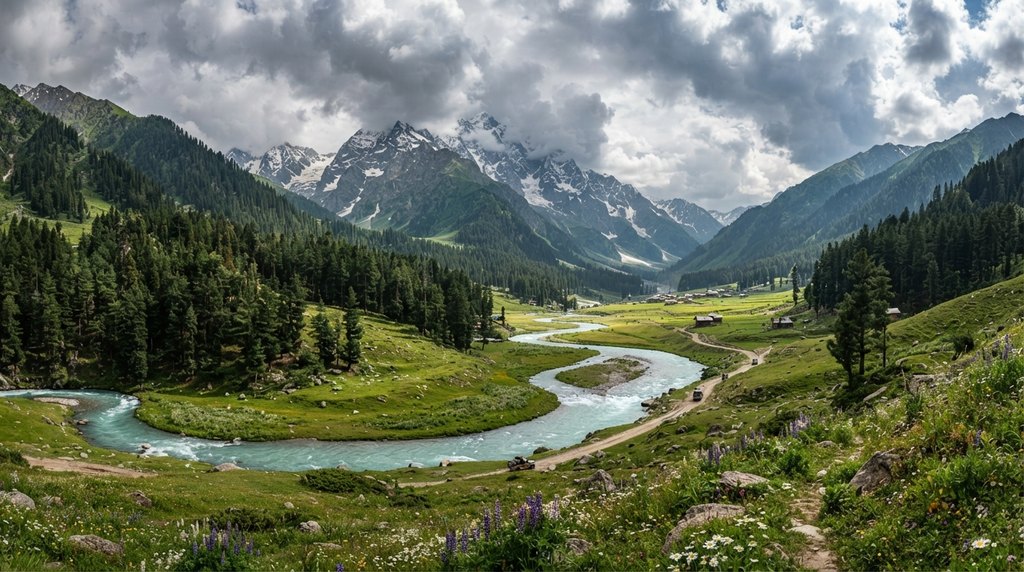
Kaghan is the easiest big-mountain valley to reach from Islamabad, roughly seven hours by road depending on traffic. Naran (about 2,500 m) is the base. From here you can visit Lake Saiful Muluk by jeep and a short walk, then continue up the valley in summer to Lulusar Lake and Babusar Pass (4,173 m). Shogran and the Siri Paye meadows offer cooler forest and meadow scenery, and the Kunhar River runs alongside the road. Hiking and camping are popular in season, and the upper valley is typically snowbound in winter.
This page only introduces Naran and Kaghan. Our dedicated guide covers attractions, activities, trekking, camping and the best time to visit in full.
Read more: Naran and Kaghan Valley Guide
Swat Valley
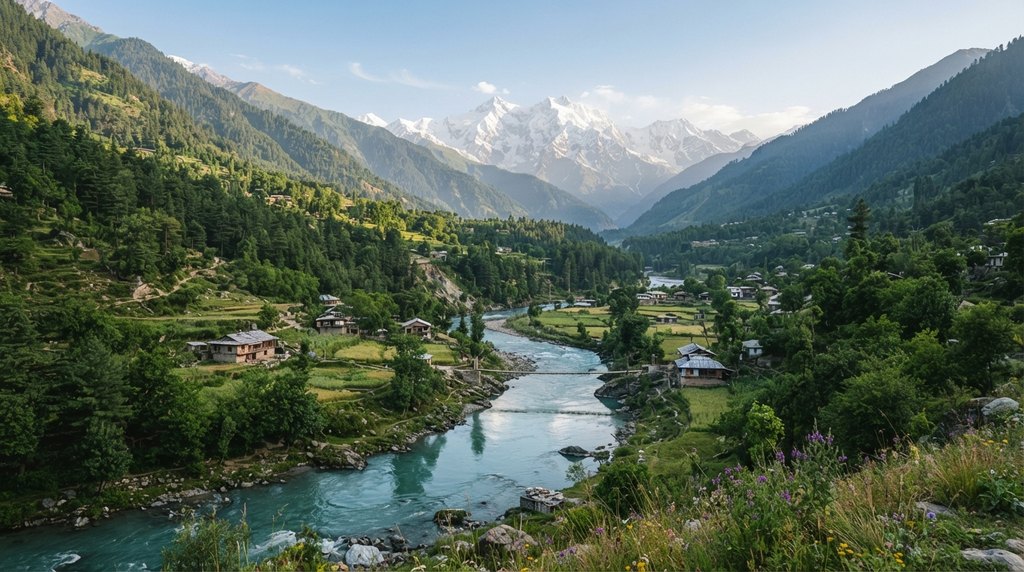
Swat is greener, lower and easier than the high Karakoram, which makes it a popular choice for families and short trips. Mingora is the main city and gateway. Further up the valley are Fizagat Park, the riverside bazaar town of Bahrain, and Kalam (about 2,000 m), a base for forests, rivers and lakes such as Mahodand. Malam Jabba is known for its winter skiing and chairlift, and waterfalls and hiking trails dot the upper valley.
Swat also has important Buddhist heritage, including the Butkara Stupa and the Swat Museum. Stay out of riverbeds and follow flood alerts at all times (see the safety section).
Best for: families, greenery, snow in winter, heritage. Suggested time: 3 to 4 days.
Read more: Swat Valley travel guide
Gilgit
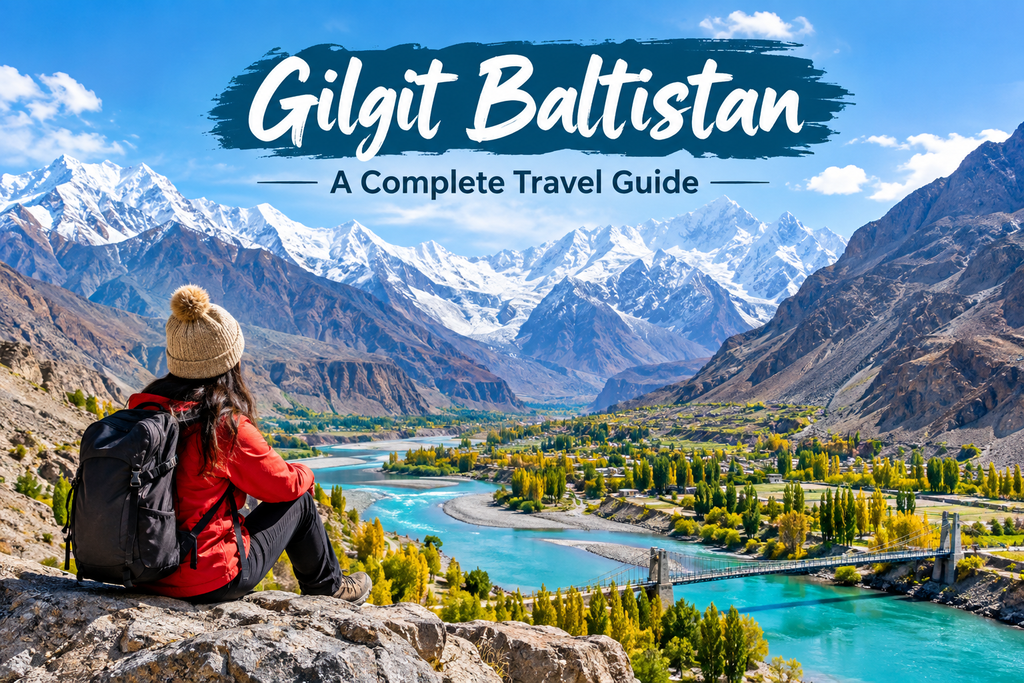
Gilgit is the main crossroads of the north, where roads meet for Hunza, Skardu, Fairy Meadows and the route west toward Ghizer and Chitral. Most travellers pass through, but it is worth a night. The city has busy local markets for dried fruit and handicrafts, the Gilgit River, and the Kargah Buddha, an ancient Buddhist rock carving usually dated to around the seventh century.
The standout excursion is Naltar Valley, a few hours by 4×4, known for pine forests, colourful lakes and a small ski area in winter. Gilgit also has an airport with flights from Islamabad, which makes it a useful entry or exit point.
Read more: Gilgit travel guide
Chitral
Chitral is the cultural heart of the Hindu Kush. Chitral town has a historic fort and the Shahi Mosque, and Tirich Mir (7,708 m), the highest peak of the Hindu Kush, dominates the northern skyline. The Kalash valleys of Bumburet, Rumbur and Birir are home to the Kalasha people, with a distinct language, dress and religion, and festivals that draw visitors each year.
Shandur Pass (about 3,700 m) hosts the Shandur Polo Festival, usually in June or July, where teams from Chitral and Gilgit-Baltistan play freestyle polo on the world’s highest polo ground. Visit with respect: ask before photographing people, follow local guidance around sacred spaces, and note that area rules for foreign visitors can change.
Best for: culture, festivals, mountain scenery. Suggested time: 4 to 6 days.
Neelum Valley
Neelum Valley in Azad Kashmir follows the Neelum River north from Muzaffarabad through forested slopes and small villages. Typical stops are Keran (about 1,524 m), Sharda, known for the ruins of an ancient temple and learning centre, and Kel, the base for the short, steep climb up to the hilltop village of Arang Kel. The journey is slow and scenic, with waterfalls and riverside stays along the way.
The valley lies close to the Line of Control, mobile signal can be limited, and access rules for foreign visitors differ from those for domestic travellers, so check with local authorities or a registered operator before you go.
Best for: quiet river scenery, villages and short hikes. Suggested time: 3 to 4 days.
Read more: Neelum Valley travel guide
Ratti Gali Lake
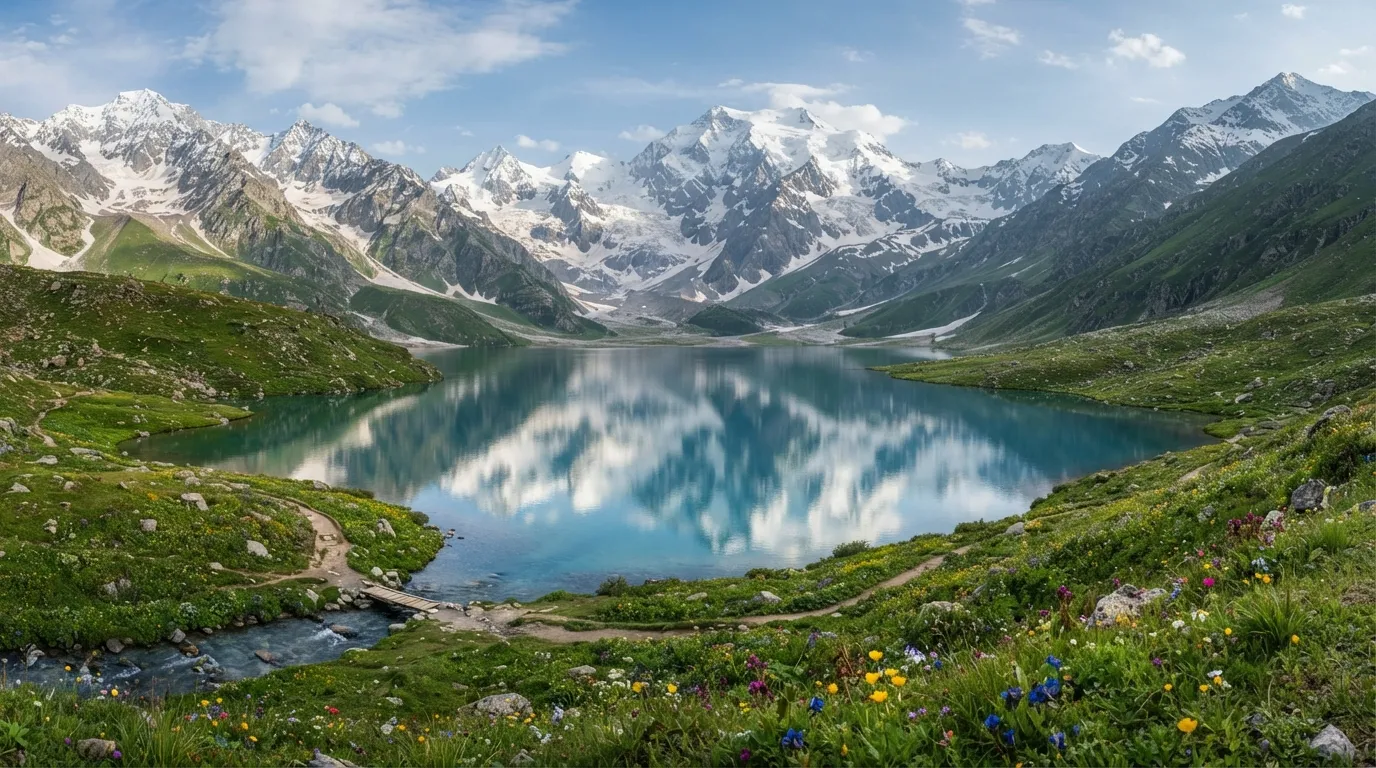
Ratti Gali is an alpine glacial lake at about 3,700 m in the upper Neelum area. It is usually reached by a rough jeep track from Dowarian followed by a walk, and is best visited in summer once the snow has cleared. It fits naturally with other adventure destinations in this guide and rewards visitors with meadows, cold blue water and wide mountain views.
Read more: Ratti Gali Lake Guide
Fairy Meadows
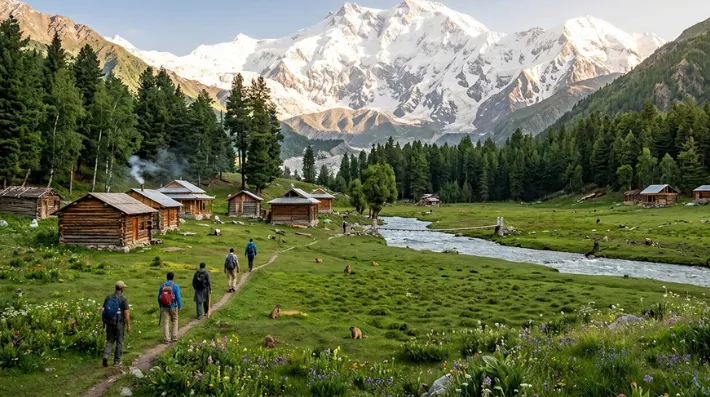
Fairy Meadows sits at about 3,300 m beneath Nanga Parbat, the ninth-highest mountain in the world. Access is by a jeep ride from Raikot Bridge on the Karakoram Highway to the village of Tato, run by local operators, followed by a hike of roughly 5 km that takes about three to four hours. Visitors stay in huts or camps, and many continue to Nanga Parbat viewpoints or base camp with a guide.
Because you sleep at around 3,300 m after a big climb, take it slowly, drink water and watch for altitude symptoms. Pack light, since you carry your own bag on the trail.
Best for: trekking, camping and close views of Nanga Parbat. Suggested time: 2 days.
Read more: Fairy Meadows travel guide
Best Places in Northern Pakistan for Different Types of Travellers
Different travellers want different things, so use these shortlists as a starting point.
Best Northern Pakistan Destinations for Families
- Hunza: Many hotels, short sightseeing legs and gentle walks around the forts and orchards.
- Naran: Easy to reach from Islamabad and good for lakeside days, but busy in peak season and high enough to need rest.
- Swat: Lower altitude and green scenery, though families should stay well away from riverbanks.
- Skardu: Lakes and desert are family-friendly, but Deosai days are long and high, so plan with care for young children.
Best Places for Adventure
- Skardu: Gateway for Deosai, K2 and Baltoro trekking expeditions and jeep safaris.
- Fairy Meadows: Jeep ride, forest trail and Nanga Parbat base camp excursions.
- Hunza: Glacier walks, high viewpoints and base camp treks with a guide.
- Chitral: Remote valleys, Kalash trekking and the Shandur route.
- Ratti Gali Lake: A rough jeep track and a high alpine lake in Neelum.
Best Places for Couples
- Hunza: Quiet viewpoints, orchard walks and hotels with mountain views.
- Skardu: Lakeside stays, scenic drives and desert sunsets.
- Naran: Lake and river scenery, best outside the busiest weeks.
- Neelum Valley: Riverside stays and quiet villages outside peak holidays.
Best Places for Hiking and Trekking
- Fairy Meadows: A moderate forest trail with an optional base camp trek.
- Ratti Gali: A short high-altitude lake hike after the jeep track.
- Deosai: Flat high-plateau walking with wide views and wildflowers in summer.
- Hunza: Glacier, village and viewpoint walks of varying difficulty.
- Skardu: Day hikes near the lakes and longer treks starting from Shigar.
Read more: [LINK: Best Hiking Trails in Pakistan for Beginners]
Best Things to Do in Northern Pakistan
Many travellers search by activity rather than destination, so here are the experiences worth building a trip around.
Explore Mountain Valleys
Drive or walk through Hunza’s orchards, Shigar’s villages, the Kaghan Valley or the upper Swat Valley. Valleys show the region at its most varied, from desert slopes to pine forest.
Visit Alpine Lakes
Saiful Muluk, Lulusar, Attabad, Upper and Lower Kachura, and Ratti Gali are the best known. Water colour and access vary with season, and the highest lakes are summer-only.
Go Hiking and Trekking
Start with easy walks and build up. Fairy Meadows and Ratti Gali are good first mountain hikes. Longer treks need a guide and proper preparation.
Read more: Best Hiking Trails in Pakistan for Beginners
Camping in Northern Pakistan
Camping is popular at Fairy Meadows, Saiful Muluk and on the Deosai plateau in summer. Use established camp areas, bring warm sleeping gear, and leave no trace.
Take a Road Trip
The Karakoram Highway is the headline route, with branches to Skardu, Naran and Swat. Build in stops and spare days, and avoid driving mountain roads at night.
Explore Historic Forts
Baltit and Altit in Hunza, Shigar Fort, Khaplu Palace, Kharpocho in Skardu and Chitral Fort show how mountain kingdoms once lived and traded.
Experience Local Culture and Food
Try chapshuro, Hunza walnut cake and dried apricots in Hunza, fresh trout in Kaghan and Swat, and pink noon chai in cold mountain towns. Festivals such as Shandur Polo and the Kalash celebrations are unforgettable if you plan around them.
Photography and Scenic Sightseeing
Aim for sunrise and late afternoon, when light is softest. Hunza viewpoints, Attabad Lake, Passu Cones and Deosai’s wide skies are favourites, and October colour is a draw for photographers.
Visit Glaciers and High-Altitude Landscapes
Passu, Batura and Raikot glaciers can be viewed from lookouts or short walks, while Khunjerab and Deosai show high-altitude terrain without a technical trek. Do not walk on glaciers without a guide.
Experience Adventure Activities
Options include jeep safaris, rafting on the Kunhar River near Naran, winter skiing at Malam Jabba and Naltar, and guided mountaineering and trekking expeditions. Choose registered operators and check seasonal availability.
Read more: camping, road trips, culture and food
Best Time to Visit Northern Pakistan
Conditions vary sharply with altitude, so a place can be pleasant in the valley and still snowbound higher up. This section is a quick summary, and our dedicated seasonal guide goes into far more detail.
Northern Pakistan in Spring
From March to May, lower valleys wake up. Hunza’s apricot and cherry blossom is a highlight around April, and Swat and the lower Kaghan Valley turn green. High passes and plateaus such as Babusar and Deosai are usually still closed by snow, and nights remain cold. Spring suits sightseeing and relaxed road trips at lower altitudes.
Northern Pakistan in Summer
June to August is peak season for Hunza, Skardu, Naran and Swat. High roads and plateaus open, trekking is at its best, and long road trips are possible. Expect crowds and higher prices, especially around public holidays. Monsoon rain from around July can cause landslides and flash floods in Khyber Pakhtunkhwa and Azad Kashmir and on lower sections of the highway, so keep your plans flexible.
Northern Pakistan in Autumn
September and October bring clear skies, comfortable days and fewer crowds. Hunza and Skardu are known for golden autumn colour, usually peaking in October, which makes it a favourite for photography. Nights are cold, and high routes begin to close from late October.
Northern Pakistan in Winter
December to February brings snow. Swat and Malam Jabba are the main winter destinations, while Hunza and Skardu are quiet, cold and beautiful. Many high roads close, snowfall can block routes and cancel flights, and some hotels shut. Check road conditions daily and carry proper winter gear.
Best Months for Northern Pakistan
| Month | Conditions | Suitable for |
|---|---|---|
| March | Spring begins; cold at altitude | Lower valleys |
| April | Pleasant in many areas; blossom in Hunza | Sightseeing, photography |
| May | Mountain season begins; Kalash spring festival | Road trips |
| June | Popular summer season; Shandur festival in some years | Northern valleys |
| July | Peak summer travel; monsoon showers possible | Hunza, Skardu, Naran |
| August | Peak mountain travel; Kalash summer festival | Northern areas |
| September | Pleasant, clearer skies | Road trips |
| October | Autumn colour; cold nights | Photography |
| November | Cooler; high routes closing | Selected destinations |
| December to February | Winter; Kalash winter festival in December | Snow destinations |
Festival and road-opening dates change each year, so confirm them before you book.
Read more: Best Time to Visit Pakistan
How to Travel to Northern Pakistan
Islamabad is the main gateway. From there you can drive to most destinations or fly to Skardu and Gilgit. Because mountain roads are slow and weather changes quickly, always add a buffer day.
Travelling by Road
- Islamabad to the north: Most road trips start in Islamabad or Rawalpindi, and travellers from Lahore usually add a day or fly.
- Private car: Gives flexibility, and most visitors hire a vehicle with a driver who knows the mountain roads rather than self-driving.
- Rental vehicle: Choose a reliable car or 4×4 and check tyres, brakes and spare wheel. Self-driving is best left to experienced mountain drivers.
- Bus and coach: Scheduled coach services link major cities to Gilgit, Skardu and Swat. They are budget-friendly but slower and less flexible, so check current operators and timetables.
- Tour operators: Useful for first-timers, groups and trips with permits. Choose registered operators with good recent reviews.
The table below gives approximate drive times from Islamabad. Real times depend on traffic, road works, weather and how often you stop.
| Route from Islamabad | Approx. road time | Notes |
|---|---|---|
| Naran (Kaghan Valley) | About 7 hours | Via Abbottabad, Mansehra and Balakot |
| Swat (Mingora) | About 4 to 6 hours | Kalam adds several more hours |
| Muzaffarabad | About 3 hours | Keran in Neelum is about 3 more hours |
| Chilas | About 10 to 12 hours | Common overnight stop on the KKH |
| Gilgit | About 14 to 16 hours | Usually split over two days |
| Hunza (Karimabad) | About 16 to 18 hours | Usually two days by road |
| Skardu | About 20 to 24 hours | Usually two days by road |
| Chitral | About 9 to 12 hours | Via Dir and the Lowari Tunnel |
Travelling by Air
PIA and private airlines fly between Islamabad and both Skardu and Gilgit, and PIA announced Lahore flights to these cities in early 2026. The flight takes about an hour and saves a long mountain drive, but mountain weather often delays or cancels flights. Book flexible tickets, keep a spare day at both ends, keep medicines and essentials in your hand luggage, and have a road backup plan. Fares vary widely by date, so compare options close to travel.
Northern Pakistan Road Trips
The Karakoram Highway (KKH, N-35) is the backbone of northern travel. It runs from Hasan Abdal through Abbottabad, Mansehra and Besham to Chilas and Gilgit, then up the Hunza Valley to Sost and Khunjerab Pass.
- Islamabad to Hunza: KKH via Chilas and Gilgit, usually with an overnight in Chilas or Gilgit.
- Islamabad to Skardu: KKH to Chilas, then along the Indus via Jaglot and the Skardu road, or by air.
- Islamabad to Naran: Via Abbottabad, Mansehra and Balakot, ideal for a first mountain trip.
- Gilgit routes: Gilgit connects to Hunza, to Skardu, to Fairy Meadows via Raikot Bridge, and in summer toward Shandur and Chitral. Road status changes, so check locally.
Read more: Karakoram Highway travel guide
Northern Pakistan Travel Itineraries
These sample itineraries are realistic rather than ambitious. Each assumes summer conditions, includes buffer time and keeps sleeping altitude rising gradually. Adjust for season, flight availability and road status.
3-Day Northern Pakistan Itinerary
| Day | Plan |
|---|---|
| Day 1 | Islamabad to Naran via Balakot. Evening walk in Naran and the Kunhar River. |
| Day 2 | Jeep and walk to Lake Saiful Muluk. Afternoon drive toward Lulusar Lake if the upper valley is open. |
| Day 3 | Visit Shogran or Siri Paye if time allows, then return to Islamabad. |
5-Day Northern Pakistan Itinerary
This route combines Kaghan and Neelum, two valleys close to each other.
| Day | Plan |
|---|---|
| Day 1 | Islamabad to Naran. |
| Day 2 | Saiful Muluk Lake in the morning, then Lulusar Lake and Babusar Top in summer. |
| Day 3 | Naran to Muzaffarabad and on to Keran in Neelum Valley. |
| Day 4 | Keran to Sharda and Kel, with the climb to Arang Kel, or a jeep trip toward Ratti Gali. |
| Day 5 | Return to Islamabad (a long day), or add a spare night in Keran. |
Short on time and prefer greenery? Swat and Kalam also fit well into five days from Islamabad.
7-Day Northern Pakistan Itinerary
This route focuses on Hunza with a Fairy Meadows option. Fairy Meadows involves a big jump in sleeping altitude, so skip it or go slowly if you are prone to altitude problems.
| Day | Plan |
|---|---|
| Day 1 | Islamabad to Chilas by road, or fly to Gilgit and drive on. |
| Day 2 | Raikot Bridge by jeep to Tato, then hike to Fairy Meadows (optional). Overnight there. |
| Day 3 | Return to Raikot Bridge and drive to Karimabad (Hunza). |
| Day 4 | Baltit and Altit forts, Eagle’s Nest sunset viewpoint. |
| Day 5 | Upper Hunza: Attabad Lake, Hussaini Bridge and Passu. Khunjerab Pass if open and conditions allow. |
| Day 6 | Hunza to Gilgit and fly or drive onward. |
| Day 7 | Spare day for weather delays and return to Islamabad. |
10-Day Northern Pakistan Itinerary
A classic Hunza and Skardu route, with Hunza first to help you acclimatise.
| Day | Plan |
|---|---|
| Day 1 | Islamabad to Chilas. |
| Day 2 | Chilas to Gilgit and Karimabad (Hunza). |
| Day 3 | Baltit, Altit and Eagle’s Nest. |
| Day 4 | Upper Hunza: Attabad Lake, Passu, Hussaini Bridge. Khunjerab Pass if open. |
| Day 5 | Karimabad to Gilgit and on to Skardu. |
| Day 6 | Upper and Lower Kachura Lakes, Shangrila, Katpana Cold Desert. |
| Day 7 | Full day on Deosai plateau (summer only). |
| Day 8 | Shigar and Khaplu. |
| Day 9 | Spare day for rest or weather delays. |
| Day 10 | Fly Skardu to Islamabad, or drive back with an overnight stop. |
14-Day Northern Pakistan Itinerary
For travellers with more time, this adds Kaghan and Fairy Meadows to the Hunza and Skardu route.
| Day | Plan |
|---|---|
| Day 1 | Islamabad to Naran. |
| Day 2 | Lake Saiful Muluk and Naran. |
| Day 3 | Naran over Babusar Pass (summer only) to Chilas. |
| Day 4 | Raikot Bridge, Tato and Fairy Meadows. |
| Day 5 | Return and drive to Karimabad (Hunza). |
| Days 6 to 7 | Hunza forts, viewpoints, Attabad, Passu and Khunjerab if open. |
| Day 8 | Hunza to Skardu via Gilgit. |
| Day 9 | Kachura lakes, Shangrila and Katpana. |
| Day 10 | Deosai plateau. |
| Day 11 | Shigar and Khaplu. |
| Day 12 | Rest or spare day. |
| Day 13 | Fly Skardu to Islamabad (buffer for weather). |
| Day 14 | Spare day or departure. |
Read more: Northern Pakistan itinerary
Northern Pakistan Travel Cost
Costs vary widely with season, group size and comfort level, so the figures below are broad indicative ranges in Pakistani rupees for 2026, not fixed prices. Peak months of June to August and public holidays cost the most. Confirm current prices with hotels, drivers and operators before you budget, and check the date on this page.
Accommodation Costs
| Level | Typical range (per night) | What to expect |
|---|---|---|
| Budget | About PKR 2,000 to 5,000 per person, or PKR 4,000 to 9,000 per room | Guesthouses and simple hotels, basic heating and hot water |
| Mid-range | About PKR 10,000 to 25,000 per room | Comfortable hotels, better views and food, more reliable power and heating |
| Premium | About PKR 30,000 and above per room | Lakeside or boutique properties and peak-season rates |
Transportation Costs
- Private vehicle with driver: About PKR 15,000 to 30,000 per day depending on vehicle, route and season, shared across the group.
- Jeeps for local access: For example to Saiful Muluk, Tato or Ratti Gali, roughly PKR 4,000 to 12,000 per jeep depending on route and season.
- Flights: Domestic fares to Skardu or Gilgit were reported in early 2026 at about PKR 8,000 to 13,000 one way from Islamabad, but vary widely.
- Coach services: Usually the cheapest option for long journeys between major cities.
Food Costs
Expect about PKR 1,500 to 4,000 per person per day, depending on whether you eat at local dhabas or tourist restaurants. Prices rise at remote and high-altitude locations, and bottled water costs more in remote areas.
Activity Costs
Entry fees, boat rides, guides, horse hire, camping charges and festival transport usually add about PKR 500 to 5,000 per person per day, and more for multi-day treks, which need a licensed operator, permits and porters.
Estimated Northern Pakistan Trip Budget
| Travel style | Per person per day | 7-day trip (rounded) | What it includes |
|---|---|---|---|
| Budget | About PKR 8,000 to 15,000 | About PKR 56,000 to 105,000 | Shared rooms, coaches or shared vehicles, local food |
| Mid-range | About PKR 15,000 to 30,000 | About PKR 105,000 to 210,000 | Private vehicle, comfortable twin-share hotels, restaurant meals |
| Premium | PKR 35,000 and above | PKR 245,000 and above | Better hotels, flights, private guides |
For international visitors, guided packages listed by tour operators for 2026 often fall between about US$1,800 and US$3,200 per person for 10 to 14 days, depending on hotels, season and group size. Flights to Pakistan are extra.
Budget tips: Travel in shoulder months, book early, share vehicles with other travellers, and keep itineraries focused on fewer places. These figures should be reviewed every few months.
Where to Stay in Northern Pakistan
Book ahead for June to August and public holidays, and ask about heating, hot water, backup power and internet before you confirm.
Hotels in Hunza
Karimabad is the most convenient base, with views of Baltit Fort and Rakaposhi. Altit, Ganish and Aliabad offer quieter or cheaper stays, while Passu and Gulmit suit upper Hunza. Choose a room with a view of the valley.
Hotels in Skardu
Stay in Skardu city for flights and convenience, near Kachura and Shangrila for lakeside scenery, or in Shigar for heritage stays. Khaplu is best for a quiet, longer stay. Deosai days are best planned from Skardu.
Hotels in Naran
Naran town hotels line the Kunhar River and fill quickly in summer. Rates rise sharply in peak weeks, and power cuts and water pressure can be issues, so confirm facilities in advance.
Hotels in Swat
Mingora suits arrival and city stays, Bahrain and Madyan offer riverside hotels, Kalam is the main base for upper Swat, and Malam Jabba is popular in winter. Choose hotels set back from riverbanks and check flood advice.
Guesthouses and Local Accommodation
Family-run guesthouses and homestays in villages such as Altit, Arang Kel and upper Hunza give a closer look at local life, often with home-cooked meals and warm hospitality. Expect simpler facilities.
Camping in Northern Pakistan
Camping is available at Fairy Meadows, Saiful Muluk, Deosai and several lakes in summer. Use established camp areas, carry a three-season sleeping bag suited to cold nights, protect food from wildlife, and carry out all rubbish.
What to Pack for Northern Pakistan
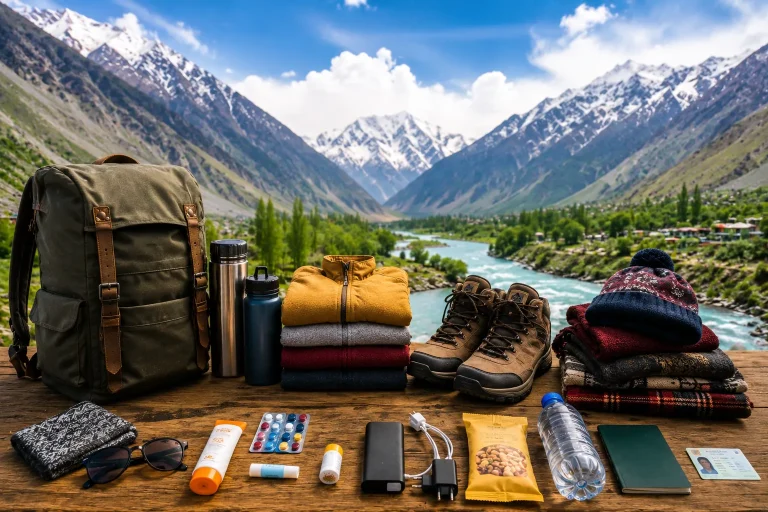
The core idea is layers. Days can be warm and nights cold, so pack clothes you can add and remove. Here is a quick summary.
Clothing
Quick-dry T-shirts, comfortable trousers, a fleece, a warm jacket and a waterproof shell. Add a beanie, gloves and scarf even in summer.
Footwear
Broken-in walking shoes for most trips, hiking shoes with grip for trails, and slippers or sandals for hotels. Pack spare socks.
Travel Documents
Carry your CNIC or passport (and visa), booking confirmations, emergency contacts and copies. Keep some cash, since ATMs are limited in remote places.
Medicines and Personal Items
Bring personal medicines, a basic first-aid kit, sunscreen, lip balm and motion-sickness tablets. Ask your doctor about altitude before high-altitude travel.
Electronics
A power bank, charger, offline maps and a torch or headlamp are essential, because signal and electricity can be patchy.
Hiking and Camping Gear
A daypack with rain cover, water bottle, headlamp and trekking poles for hikes, and a warm sleeping bag for camps.
Seasonal Packing
Summer needs sun protection and a warm layer for nights. Winter needs thermals, an insulated jacket and waterproof boots. Monsoon travel needs rain protection and a flexible schedule.
Our dedicated checklist breaks this down by season, destination, travel style and trip length, with a printable list and a last-minute checklist.
Read more: Packing List for Northern Areas of Pakistan
Northern Pakistan Travel Tips
Check Weather Before Travelling
Mountain weather changes fast. Check forecasts for each stop, not just your start point, and be ready to change plans.
Check Road Conditions
Landslides, snow and road works can close routes. Ask your hotel, driver or local authorities for daily updates, especially on the Karakoram Highway, Babusar and Skardu roads.
Keep Extra Travel Time
Roads are slow and delays are common. Keep at least one spare day, and never plan a tight connection to a flight or border crossing.
Carry Cash
Cards and ATMs may not work outside larger towns. Carry enough cash in small notes and withdraw before you leave major cities.
Download Offline Maps
Mobile signal can vanish for hours. Download maps, bookings and key phone numbers before you go.
Respect Local Culture
Dress modestly, ask before photographing people (especially women), and follow local customs and festival rules. In Kalash valleys, respect sacred areas and guidance from residents.
Avoid Littering
Carry your rubbish out of lakes, meadows and trails. Mountain areas have limited waste facilities.
Travel Responsibly
Use local guides, hotels and restaurants, buy from local artisans, avoid wasting water and fuel, and keep a respectful distance from wildlife.
Don’t Overload Your Itinerary
The most common mistake is trying to see too much. Fewer places with more time per stop make for a better and safer trip.
Hiking and Trekking in Northern Pakistan
Beginner-Friendly Hiking
Short walks to Lake Saiful Muluk, around Ratti Gali Lake, up to Arang Kel, and the village and fort trails of Hunza suit beginners with comfortable shoes and good weather.
Moderate Hiking Trails
Fairy Meadows (about 5 km and three to four hours uphill from Tato), glacier viewpoints near Passu and day hikes from Skardu and Shigar need a reasonable fitness level and sturdy shoes.
High-Altitude Treks
Treks such as Nanga Parbat base camp, Rakaposhi base camp, Rush Lake and the Baltoro route toward K2 are demanding. They usually need a licensed operator, permits, guides and porters, proper acclimatisation and good fitness.
What to Know Before Hiking
- Start early, because afternoon weather and glacier-fed streams can turn dangerous.
- Hire a local guide for remote, glaciated or high-altitude routes.
- Carry water, snacks, a headlamp, rain gear and a basic first-aid kit.
- Tell someone your route and expected return time.
- Turn back if the weather changes or you feel unwell.
Read more: [LINK: Best Hiking Trails in Pakistan for Beginners]
National Parks and Wildlife in Northern Pakistan
Deosai National Park
Deosai is a high-altitude plateau at an average of about 4,100 m, known for summer wildflowers, marmots and the Himalayan brown bear. It is typically accessible from around mid or late June to early October and is a long, cold, windy day trip or camping destination. Carry warm layers and plenty of water.
Khunjerab National Park
Khunjerab National Park lies along the road to Khunjerab Pass and protects high-mountain wildlife such as Marco Polo sheep, ibex and the elusive snow leopard. Most visitors see only landscapes and perhaps a few animals from the road. Check visitor and entry rules before you go.
Wildlife Experiences
Marmots on the Deosai plains, ibex on high slopes and rare markhor in protected areas near Chitral reward patient observers. Early morning and late afternoon are the best times.
Responsible Wildlife Tourism
Keep your distance, never feed animals, stay on roads and tracks, keep noise low, and check local rules before flying a drone. Pay park fees, since they support conservation.
Read more: Pakistan’s Best 6 National Parks Guide
Is Northern Pakistan Safe for Tourists?
Many people travel through northern Pakistan every season, but no destination is risk-free and conditions vary by place and change over time. The main risks for most visitors are natural: weather, landslides, rivers, altitude and long mountain drives. If you are an international visitor, also read your government’s current travel advice and check area-permission rules before booking. Police (15) and Rescue 1122 operate in many districts, but confirm local emergency numbers on arrival.
Road and Weather Safety
Avoid night driving on mountain roads, use experienced drivers and well-maintained vehicles, and check daily road updates. During monsoon, heavy rain can trigger landslides and flash floods. In June 2025, tourists picnicking on the bank of the Swat River were swept away by a sudden flood despite warnings. Stay out of riverbeds and low riverbanks, and respect local alerts and restrictions.
Mountain and Hiking Safety
Use guides on remote routes, avoid river crossings in the afternoon when glacier melt rises, carry emergency gear, and never go beyond your fitness level. Check weather before every hike.
Altitude Considerations
Altitude illness depends mainly on how high you sleep and how fast you climb. CDC guidance based on Wilderness Medical Society recommendations advises avoiding a one-day jump to a sleeping altitude of about 2,750 m or more, and above 3,000 m gaining no more than about 500 m of sleeping altitude per night. Drink water, rest on arrival and descend if symptoms are severe, such as confusion, unsteady walking or breathlessness at rest. Ask a doctor before travel if you have heart or lung conditions or are pregnant.
Travelling with Children
Choose lower-altitude destinations, plan shorter driving days, carry medicines and warm layers, and speak to a paediatrician before taking young children to high places such as Fairy Meadows, Deosai or Khunjerab.
Responsible Travel
Use registered operators, share your itinerary with someone, buy travel or medical insurance that covers mountain areas, and follow local advice. The safest trips are flexible, well-paced and prepared.
Northern Pakistan Travel Guide for Different Travellers
Northern Pakistan for Families
Choose comfortable stays, shorter drives and lower altitudes. Swat, Naran, Hunza and Skardu’s lakes work well. Carry snacks, medicines and warm clothes for children.
Northern Pakistan for Couples
Hunza and Skardu offer scenic quiet, Neelum and Naran suit lakeside and river evenings, and shoulder seasons are calmer and often better value.
Northern Pakistan for Solo Travellers
Solo travellers can join small group tours, use trusted drivers and stay in guesthouses where other travellers gather. Share your plans, keep cash and documents safe, and respect local customs. Solo women travellers may prefer group tours or reputable female-friendly guesthouses.
Northern Pakistan for First-Time Visitors
Start with Hunza, or a short Naran and Swat trip. Keep the itinerary simple, travel in summer or early autumn, and use this guide and our destination articles to build confidence.
Northern Pakistan for Adventure Travellers
Skardu, Fairy Meadows, Chitral and Ratti Gali offer treks, jeep tracks and high-altitude scenery. Use licensed guides, build in acclimatisation and weather buffers, and check permits for high routes.
Frequently Asked Questions About Northern Pakistan
What is the best place to visit in Northern Pakistan?
There is no single best place, because it depends on your interests. Hunza is the best all-rounder for first-time visitors, combining forts, orchards, lakes and easy road access. Skardu suits lakes, deserts and high plateaus, Naran-Kaghan is the easiest escape from Islamabad, and Fairy Meadows offers close views of Nanga Parbat.
What are the most beautiful places in Northern Pakistan?
Beauty is subjective, but the most-photographed places include Attabad Lake and the Passu Cones in Hunza, Deosai Plains and the Kachura lakes near Skardu, Lake Saiful Muluk in Kaghan, Fairy Meadows beneath Nanga Parbat, the Kalash valleys of Chitral, and Arang Kel and Ratti Gali Lake in Neelum Valley.
Which month is best for Northern Pakistan?
June to September is best for most routes, because high roads and plateaus such as Deosai and Babusar are usually open. July and August are busiest and can bring monsoon rain in some areas. September and October offer autumn colour and fewer crowds, while April suits lower valleys and Hunza’s apricot blossom.
How many days are enough for Northern Pakistan?
Plan 3 to 4 days for Naran-Kaghan or Swat, 5 to 7 days for Hunza alone, and 10 to 14 days to combine Hunza and Skardu comfortably. Mountain roads are slow and weather can cause delays, so add at least one spare day rather than packing in too many destinations.
How much does a Northern Pakistan trip cost?
Costs depend on season, group size and comfort level. As a rough guide, budget travellers may spend PKR 8,000 to 15,000 per person per day, and mid-range travellers PKR 15,000 to 30,000. Guided packages for international visitors listed for 2026 often fall between about US$1,800 and US$3,200 for 10 to 14 days. Always confirm current prices.
Is Northern Pakistan good for families?
Yes, with planning. Choose destinations with shorter drives and moderate altitude, such as Swat, Naran and Hunza, and avoid very high or remote places with small children. Carry medicines, extra layers and snacks, travel early in the day, and check weather and road conditions before setting out.
Is Northern Pakistan suitable for foreigners?
Many international visitors travel to Hunza, Skardu and other northern areas every year, usually through a registered tour operator. Visa and area-permission rules differ by region and change over time. Khyber Pakhtunkhwa, for example, introduced an online NOC system for foreign tourists in 2026, so check official sources before booking.
Which is better, Hunza or Skardu?
Hunza is better for culture, forts, village life and easy sightseeing with many hotels. Skardu is better for dramatic lakes, cold desert, the Deosai plateau and trek access. Hunza is often easier for first-timers, while Skardu suits travellers who want wilder, higher landscapes. With 10 days or more, combine both.
Is Hunza or Skardu better for a honeymoon?
Both work well. Hunza offers quiet viewpoints, orchard walks and cosy hotels with mountain views, while Skardu offers lakeside stays, scenic drives and desert and lake sunsets. Naran and Neelum Valley are also popular. Choose by season, comfort and travel time, and avoid rushing between far-apart destinations.
Can I visit Northern Pakistan in winter?
Yes, but only some areas are practical. Swat and Malam Jabba are popular for snow, and Hunza and Skardu are quiet and cold. Many high routes, including Babusar and Deosai, close, and snow can disrupt roads and flights. Check weather and road updates, carry winter gear, and keep your schedule flexible.
What should I pack for Northern Pakistan?
Pack layers: quick-dry clothes, a fleece, a warm waterproof jacket, thermals, broken-in walking or hiking shoes, sun protection, a power bank, medicines, documents and cash. Nights are cold even in summer. Our dedicated packing list covers each season and destination in detail.
How do I travel to Northern Pakistan from Islamabad?
Most travellers go by road, using a private car with a driver, a rental vehicle, a coach service or a tour operator. Naran and Swat are a day’s drive; Hunza and Skardu usually take two days by road. You can also fly from Islamabad to Skardu or Gilgit, though flights depend on weather.
Plan Your Northern Pakistan Trip
Follow these five steps to turn this guide into a plan.
- Plan your route: Decide whether you want one region or a longer loop, and use the itineraries above.
- Choose destinations: Pick two or three places that match your interests and travellers.
- Check the season: Match your dates to road openings, festivals and weather.
- Prepare your packing: Use our dedicated packing list for your season and destination.
- Start your journey: Share your plan, carry cash and offline maps, and keep a spare day.
| Ready to start planning? Explore GoVisitPak’s destination guides to plan your next journey through Pakistan. |