
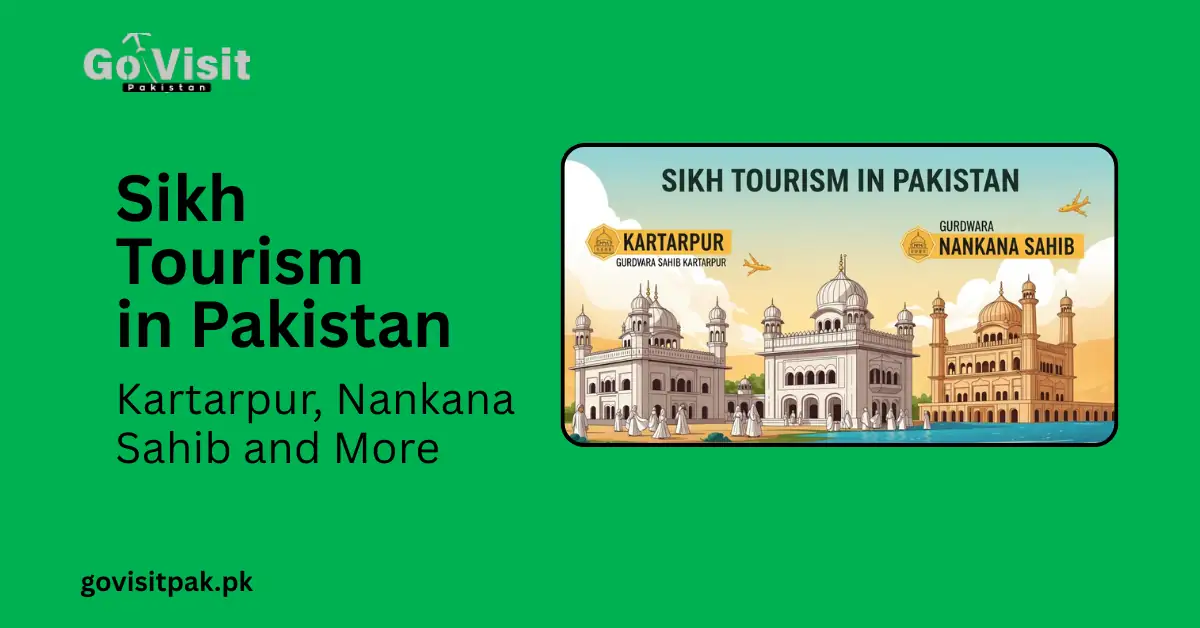
In this blog you will learn about Sikh tourism in Pakistan and the beautiful holy sites such as Nankana Sahib, Kartarpur Sahib, and Panja Sahib.
Here, you will learn about the non-violent pilgrimage of Sikhs who travel to Pakistan to visit
the sites where Guru Nanak Dev Ji spent his time and preached love and equality.
Every year, numerous Sikhs travel from other countries to pray and seek peace.
Pakistani nationals embrace them warmly. Sikh tourism promotes peace, friendship and harmony among nations, demonstrating
that Pakistan is a nation of love, respect and open hearts to all religions.
Sikh tourism in Pakistan is not travelling; it is religious travel with love, peace, and religiosity.
Thousands of Sikhs from all over the world come to Pakistan annually to see the sacred places where their religion began.
The environment seems peaceful, and the hearts become filled with respect and cheerfulness.
Pakistan is home to many holy sites linked to Guru Nanak Dev Ji, the founder of the Sikh faith.
From Nankana Sahib to Kartarpur, each site is filled with stories of kindness, equality, and hope.
People are not only praying but also bonding with the roots of Sikh history.
For us, these holy places can be accessed in a safe and comfortable way.
The tours are undertaken with caution, offering a chance to see the beauty of Pakistan while traveling along the path of faith.
What is the Significance of Sikh Tourism in Pakistan?
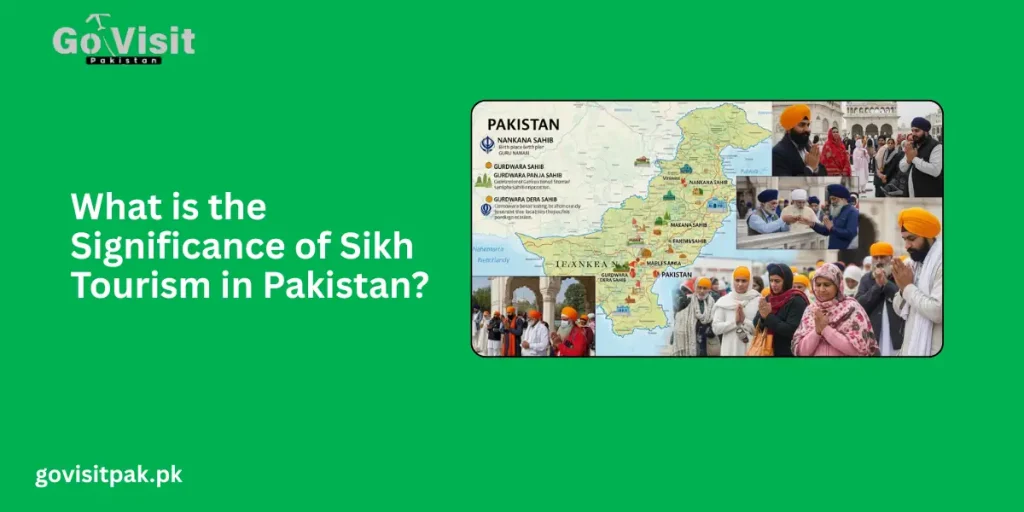
Sikh tourism plays an important role in building peace and amity between people.
It is not just a spiritual journey but also a form of culture and heritage tourism that connects visitors to Pakistan’s rich traditions and history.
Sikh tourism brings together hearts across borders. Pilgrims come to Pakistan for a visit to the land of their Gurus and return home with the memories of love and peace.
Sikh tourism educates people about Pakistan’s rich culture and hospitality.
- It depicts the message of peace Sikhism proclaims.
- It unites people from India, Canada, the UK, and numerous other nations.
- Pakistani locals greet guests with open arms and with deep respect.
- The tours foster understanding, harmony, and the hope of a peaceful future.
Sikh tourism opens the doors of Pakistan to the entire world, demonstrating that this country respects every religion and every soul.
Nankana Sahib – The Birthplace of Guru Nanak Dev Ji
Nankana Sahib is one of the holiest sites for Sikhs. It is the birthplace of Guru Nanak Dev Ji, the first Sikh Guru. The city is serene and bountiful.
- It is situated near Lahore, 75 km away.
- The primary location is Gurdwara Janam Asthan, the birthplace of Guru Nanak in 1469.
- The shrine has a golden dome and white marble walls that glimmer in the sun.
- Thousands of Sikhs visit here annually to pray and reflect on Guru Nanak’s teachings.
- The town boasts a few other gurdwaras related to his youth.
Visitors cannot help but feel emotionally attached when they walk where Guru Nanak walked.
It is a place where peace envelops every heart and compassion permeates the air.
When you travel to Nankana Sahib with us, you will not just witness history but feel it as well.
The ring of prayers, the gentle breeze, and the scent of langar food make this destination unforgettable.
Kartarpur Sahib – The Land of Love and Peace
Kartarpur Sahib is a very significant Sikh holy site for all Sikhs globally.
It is located in Pakistan’s Narowal District, near the Indian border.
Here is where Guru Nanak Dev Ji spent the later part of his life.
- The Gurdwara Darbar Sahib Kartarpur is constructed along the River Ravi.
- It is where Guru Nanak resided, taught, and assisted people until his death in 1539.
- The gurdwara is serene, lovely, and lined with green fields.
- The Kartarpur Corridor now joins Pakistan and India so that pilgrims can travel without a visa.
- Most visitors weep tears of happiness when they set foot on this sacred land.
Kartarpur is not a place; it is a feeling.
Each prayer here seems genuine and full of devotion.
The fields surrounding it glimmer in gold during the day, and the soft gurgle of the river soothes each soul.
To many of the pilgrims, entering Kartarpur is like going home — home to peace, home to love, and home to the light of Guru Nanak’s faith.
Gurdwara Panja Sahib – The Holy Handprint
Located in Hasan Abdal, close to Islamabad, is Gurdwara Panja Sahib.
It is one of the most revered places in Sikhism and is imbued with great significance.
- “Panja” is the term for “hand,” and the site carries the holy handprint of Guru Nanak Dev Ji.
- The legend goes that Guru Nanak halted a big stone using his hand, and his handprint remained as a sign of divine force.
- The gurdwara is encircled by clear water where the devotees take a sacred bath.
- Thousands of pilgrims go to Panja Sahib during Vaisakhi for blessings.
- The atmosphere is peaceful, with mountains surrounding it and calmness in all directions.
Pilgrims who travel there say that the sound of water flowing at Panja Sahib sounds like nature’s prayer.
The spiritual power here fills every visitor with light-heartedness and gratitude.
Gurdwara Dera Sahib – The Story of Bravery
Nestled in the middle of Lahore, close to the Lahore Fort, is Gurdwara Dera Sahib.
It was constructed in the memory of Guru Arjan Dev Ji, the fifth Sikh Guru.
- Guru Arjan Dev Ji got martyred in Lahore in 1606 for being a true believer of his faith.
- The gurdwara stands opposite the stunning Badshahi Mosque and Lahore Fort, reflecting religious harmony.
- Its golden dome shines in sunlight, representing courage and peace.
- Pilgrims go there to pay homage and recall the Guru’s teachings of truthfulness and patience.
Dera Sahib is more than a reminder of sacrifice; it’s a message of peace.
Beside it stand the great Mughal monuments, indicating that harmony between religions has always formed the soul of Lahore.
Gurdwara Rori Sahib is located in Eminabad, close to Gujranwala.
It is a place where Guru Nanak spent time to rest on his travels.
- The term “Rori” is derived from the fact that the site was originally covered with pebbles.
- It serves to remind all of us that peace comes only with simplicity.
- Birds chirp and worshippers pray in peace inside the quiet gurdwara.
- Many tourists feel at peace and are in touch with the Guru’s message of humility.
We include this peaceful site in our tours, giving pilgrims a chance to sit, meditate, and feel gratitude.
The simple surroundings remind everyone that true joy lies in faith, not in luxury.
What are Other Important Sikh Sites in Pakistan?
Pakistan has many other sacred Sikh sites that carry the spirit of faith and history.
Each tells a story of devotion.
- Gurdwara Chakki Sahib (Eminabad): Constructed where Guru Nanak spun a grinding stone to educate regarding equality.
- Gurdwara Sacha Sauda (Farooqabad): Dedicated to the place where Guru Nanak distributed food to poor people rather than profiteering.
- Gurdwara Bhai Joga Singh (Peshawar): Constructed in honor of a courageous Sikh devotee who exemplified faithfulness and bravery.
- Gurdwara Dera Sahib (Kartarpur): Representing peace between India and Pakistan.
- Gurdwara Punja Sahib (Taxila): Nestled amidst scenic hills, this gurdwara is a representative of miracles and blessings.
- Gurdwara Chowa Sahib (Jehlum): This is the site where Guru Nanak fetched water from a rock for parched soldiers.
Each of Pakistan’s gurdwaras contains a piece of Sikh history, ready to envelop pilgrims in open arms.
Travelling to Pakistan for Sikh pilgrimage is like traversing living history. Every step is hallowed, every noise is prayer, and every smile is peace.
- Golden domes of gurdwaras glimmer under the morning sun.
- The scent of sweet flowers and fresh langar wafts through the air.
- Locals bow in respect as they welcome visiting Sikhs.
- Roads echo with laughter, songs, and rainbow turbans.
- The calm energy of every place remains in your heart forever.
We assist in making this spiritual experience hassle-free. From airport pick and drop to hotel accommodations,
everything is organized with caution. Pilgrims can only concentrate on their prayers and experiences.
Cultural Harmony and Hospitality in Pakistan

Pakistani people are famous for their hospitality and respect.
Travellers are mostly touched by the manner in which natives welcome them — with smiles, tea, and affection.
- Guests are welcomed as family by the people of Punjab.
- Pilgrims are guided by locals to gurdwaras.
- Delight is added to the trip by street food, folk music, and vibrant bazaars.
- Most visitors comment that Pakistan becomes like home, with love and welcome.
This unity of cultures is what makes Sikh tourism in Pakistan so unique.
You will notice mosques, temples, and gurdwaras side by side — depicting the beauty of harmony.
Tips for Travelling Sikh Pilgrims
When you travel with us, everything is hassle-free and managed. But here are some easy tips for pilgrims:
- Always keep your passport and ID with you.
- Wear a head covering inside the gurdwara.
- Be respectful of local customs and individuals.
- Sample local cuisine such as halwa, roti, and lassi.
- Use a refillable water bottle and stay hydrated.
- Pick up some Urdu words — the locals appreciate it when tourists can communicate in their language.
Travelling in this manner enables you to experience both faith and culture simultaneously.
What is the Best Time to Visit Sikh Holy Sites in Pakistan?
Sikh tourism is at its best during the Vaisakhi Festival in April or Guru Nanak Gurpurab in November.
- The weather remains nice during these months.
- Gurdwaras receive special prayers, music, and congregational meals.
- Pilgrims visit from all over the globe, developing a happy atmosphere.
- These festivals remind everybody of harmony, equality, and thankfulness.
On Vaisakhi, the streets of Nankana Sahib shine bright, and the air resonates with kirtan.
Langars provide thousands of meals daily, and the city turns into an ocean of yellow — the shade of bliss.
Conclusion
Sikh tourism in Pakistan is not merely a holiday — it’s a soul experience.
From the blessings of Nankana Sahib to the serenity of Kartarpur, every destination is a story of love and devotion.
We open this door to the world. It brings people together on the grounds of culture, concern, and piety.
Pakistan’s Sikh heritage is a peace bridge — it tells us that love has no boundaries, and religion has no confines.
Every gurdwara is a story of coexistence, kindness, and religious strength.
Pilgrims leave with smiling faces and contented hearts. Crossing these sacred places is not only a journey from Pakistan
but also a journey within — toward peace, knowledge, and everlasting beliefs.
FAQs:
How near Kartarpur Sahib is to the India border?
Kartarpur Sahib is about 4.5 kilometers away from the India border. It is located close to the town of Dera Baba Nanak in Gurdaspur, Punjab, India. Pilgrims can go there easily via the Kartarpur Corridor.
What is the most important city for Sikhs in Pakistan?
Nankana Sahib is the holiest city for the Sikhs. It is the birth city of Guru Nanak Dev Ji, who was the first Sikh Guru. The city is near Lahore and has many holy gurdwaras.
Can Indian Sikhs go to Kartarpur Sahib without a passport?
No, the pilgrims will have to go through the Kartarpur Corridor upon registration and clearance by the authorities on the strength of a valid Indian passport.
May Overseas Citizens of India (OCI) go to Kartarpur Sahib?
Yes, OCI card holders may go to Kartarpur Sahib. They must carry their OCI card and a valid passport of their country.
Where do most Sikhs live in Pakistan?
Most Sikhs living in Pakistan live in the Punjab province, mainly in Hasan Abdal, Nankana Sahib, Lahore, and Sialkot. Some also live in Peshawar, Buner and Karachi.
What is the most famous gurdwara in Pakistan?
Gurdwara Panja Sahib in Hasan Abdal is the most famous and sacred Sikh shrine in Pakistan. It is well-known because of the sacred handprint of Guru Nanak Dev Ji.
What is the best time to visit Sikh holy sites in Pakistan?
The most suitable time to go is during Vaisakhi in April or Guru Nanak Gurpurab in November. The weather is pleasant, and special celebrations are held in every gurdwara.
Is it safe for Sikh pilgrims to travel to Pakistan?
Yes, Sikh pilgrims are warmly welcomed in Pakistan. The locals and the government treat them well and ensure their complete safety during the trip.
What are the documents required to travel to Sikh places in Pakistan?
Tourists require a valid passport, visa, and travel authorization (if traveling via the Kartarpur Corridor). It’s also advisable to keep identification cards and travel documents on them at all times.
Why is Sikh tourism significant in Pakistan?
Sikh tourism promotes peace, love, and friendship. It provides opportunities for learning about common history and makes Pakistan and Sikh communities across the globe a harmonious place to live.