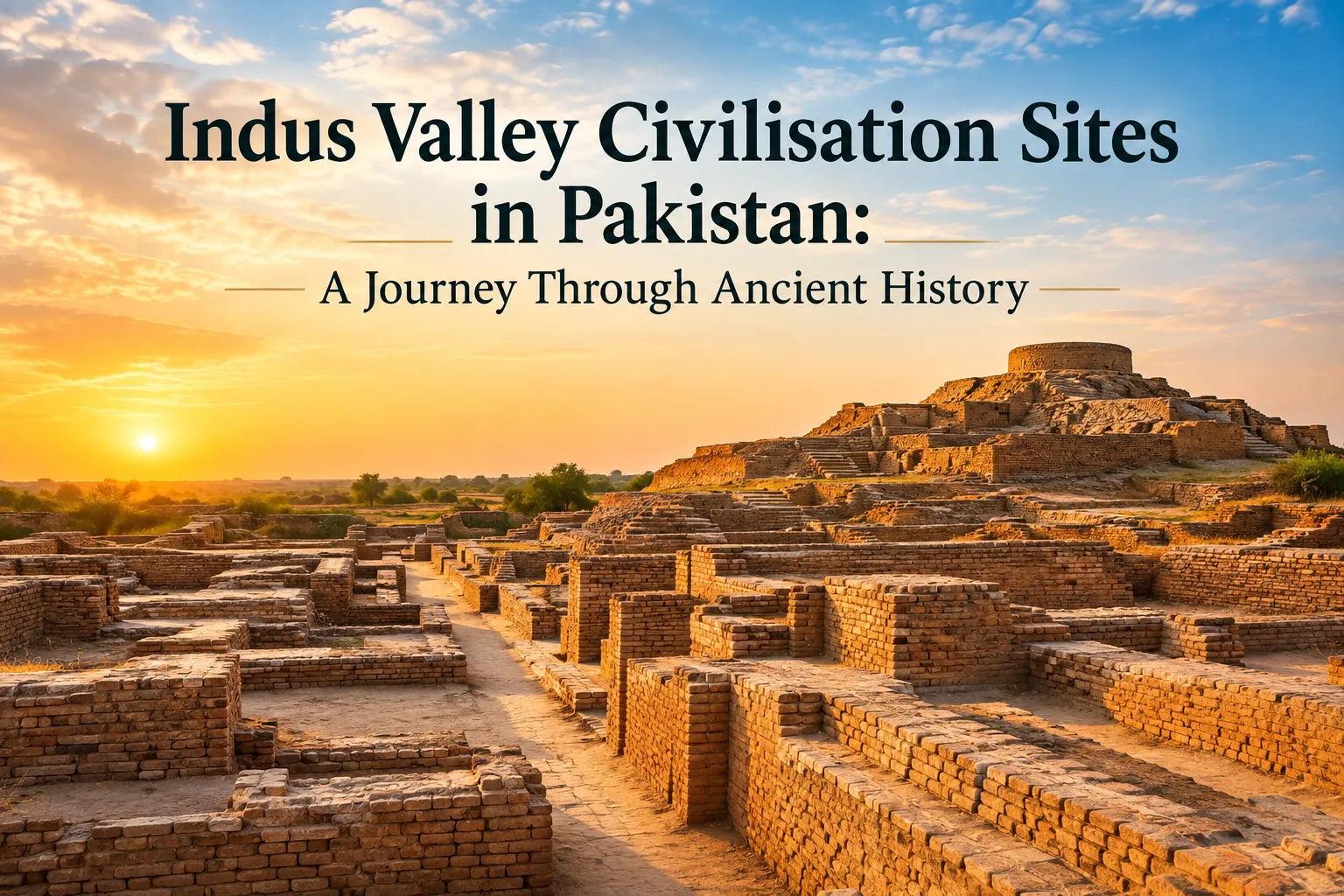
Long before modern cities, roads, and busy marketplaces shaped the landscape of Pakistan, people were already building settlements, growing crops, making pottery, trading goods, and developing organized communities. Some of the remains of these early settlements have survived for thousands of years and continue to give us a glimpse into the lives of the people who lived here.
From Mehrgarh in Balochistan to Mohenjo-daro in Sindh and Harappa in Punjab, these archaeological sites tell a story that goes far beyond ancient ruins. They help us understand how early communities lived, worked, traded, built their homes, and gradually developed more complex societies.
The Indus Valley Civilisation, also known as the Harappan Civilisation, is particularly fascinating because of the planning and organization visible at many of its settlements. Carefully laid-out streets, drainage systems, wells, brick structures, pottery, seals, craft production, and evidence of long-distance trade all point to communities with highly developed skills and systems.
For anyone interested in archaeology, ancient history, or cultural heritage, visiting these places offers something that a history book cannot quite provide. Standing among the remains of an ancient settlement makes the past feel a little less distant.
If you are interested in exploring the ancient history of Pakistan, these Indus Valley Civilisation sites in Pakistan are an excellent place to begin.
What Was the Indus Valley Civilisation?
The Indus Valley Civilisation, often referred to as the Harappan Civilisation, developed across a large region that includes present-day Pakistan and parts of northwestern India. Its Mature Harappan urban phase is generally associated with the third millennium BCE, although the roots of settled life in the region go back much further.
The civilisation is known for its carefully planned settlements, standardised brick construction, pottery, seals, craft traditions, and extensive trade networks. Archaeological evidence also points to organised approaches to water management and sanitation.
What makes the Indus civilisation especially interesting is that it was not centred around a single city. It was a much wider network of settlements and communities spread across different regions. Each site contributes another piece to the story.
Some settlements help us understand the earliest stages of farming and village life, while others show the development of large urban centres. Together, they reveal how communities in this part of South Asia changed and developed over many centuries.
1. Mohenjo-daro (The Most Famous Urban Site of the Indus Civilisation):
Among the archaeological sites associated with the Indus Valley Civilisation, Mohenjo-daro is probably the most internationally recognised. Located in Sindh, near Larkana, the ancient settlement is one of the most remarkable examples of early urban development in South Asia.
Mohenjo-daro flourished during the Mature Harappan period and covered a large area. What immediately stands out is the organisation of the settlement. Streets, houses, wells, drainage channels, and public structures were arranged in a way that suggests considerable planning.
The Great Bath is perhaps the site’s best-known structure. Along with the remains of residential areas, wells, streets, and other buildings, it gives visitors a sense of how extensive the ancient city once was.
The settlement is generally divided into a higher citadel area and a lower town. Walking among the remains, it becomes eassier to imagine that this was once a living city rather than simply a collection of old walls.
Why Visit Mohenjo-daro?
Mohenjo-daro is especially valuable for visitors who want to understand the scale and organisation of an ancient city. The remains provide clues about architecture, water management, sanitation, and everyday life thousands of years ago.
It is also one of those historical places where the physical setting adds something to the experience. Seeing the streets and structures in person can make the achievements of the people who built them much easier to appreciate.
Best for: History lovers, archaeology enthusiasts, students, photographers, and cultural travellers.
Location: Larkana District, Sindh.
2. Harappa (A Major Centre of the Harappan Civilization):
Harappa is another essential archaeological site for understanding the history of the Indus civilization. Located in Punjab near Sahiwal, the site has given its name to the wider Harappan Civilisation.
Like Mohenjo-daro, Harappa was a substantial settlement. Archaeological excavations have revealed a fortified area, residential structures, craft-production areas, cemeteries, and other remains.
A wide range of objects has also been discovered here, including pottery, jewellery, seals, tools, and other artefacts. These finds offer small but important clues about the people who lived in the settlement and the activities they carried out.
Harappa is particularly useful for understanding that the Indus civilization was not limited to one great city. Instead, it consisted of numerous settlements connected through cultural, economic, and possibly social networks.
The museum near the archaeological site can also add context to a visit by allowing visitors to see some of the objects recovered from the area.
Why Visit Harappa?
Harappa is a good destination for anyone who wants to look beyond the most famous ruins and understand the wider Harappan world. For students and families, the combination of the archaeological site and museum can make the history easier to understand.
Best for: Students, families, archaeology enthusiasts, and history lovers.
Location: Near Sahiwal, Punjab.
3. Mehrgarh (One of South Asia’s Earliest Farming Settlements):
Mehrgarh takes the story much further back than the great urban centres of Harappa and Mohenjo-daro.
Located in the Kachi Plain of Balochistan, near the Bolan Pass, Mehrgarh is one of the most important archaeological sites for understanding the early development of settled life in the region. Its archaeological sequence dates back to the 8th millennium BCE.
Unlike Mohenjo-daro, Mehrgarh was not a large Bronze Age city with an elaborate urban layout. Its importance lies somewhere earlier in the story.
Archaeological evidence from Mehrgarh provides clues about early farming, animal domestication, pottery, craft production, and changing patterns of settlement. The site helps researchers understand how communities gradually moved towards more settled agricultural ways of life.
Why Is Mehrgarh Important?
Mehrgarh allows us to look at a much earlier chapter in the history of the region.
It raises an interesting question: how did small farming communities eventually develop into the more complex societies and urban settlements that appeared centuries later?
The archaeological record from Mehrgarh helps researchers explore this gradual process rather than viewing the rise of the Indus cities as something that happened suddenly.
Best for: Archaeology enthusiasts, researchers, students, and serious history travellers.
Location: Kachi District, Balochistan.
4. Kot Diji (An Important Stage Before the Mature Harappan Cities):
Located near Khairpur in Sindh, Kot Diji is important for understanding the cultural developments that came before the fully developed cities of the Mature Harappan period.
The site is associated with the Kot Diji culture, generally considered part of the Early Harappan or pre-Harappan phase. Archaeological work has revealed distinctive pottery, mud-brick structures, and evidence of a fortified settlement.
What makes Kot Diji particularly interesting is the way it fits into the larger story. The urban traditions associated with the Mature Harappan cities did not appear overnight. They developed through earlier communities, technologies, and cultural traditions.
Kot Diji therefore provides an opportunity to look at one of the stages that came before the better-known urban centres.
Why Visit Kot Diji?
For visitors who already know about Mohenjo-daro and Harappa, Kot Diji offers another perspective on the development of the Indus cultural world.
It is especially interesting for people who want to understand how early settlements gradually became more organised and complex.
Best for: Archaeology enthusiasts, history students, photographers, and heritage travellers.
Location: Near Khairpur, Sindh.
5. Rehman Dheri (An Early Planned Settlement):
Rehman Dheri, located in Dera Ismail Khan District of Khyber Pakhtunkhwa, is another important archaeological site connected with the early development of settlements in the wider Indus cultural region.
The site is generally associated with the Early Harappan period and is known for evidence of an organised settlement layout.
Although Rehman Dheri is not as familiar to general tourists as Mohenjo-daro or Harappa, it has considerable archaeological importance. The site helps researchers study how communities in the northwestern part of the region were developing their own settlement patterns before the Mature Harappan cities reached their peak.
Its significance becomes clearer when viewed as part of the wider network of early settlements rather than as an isolated archaeological site.
Why Is Rehman Dheri Important?
Rehman Dheri adds another geographical dimension to the story of early settlement development in the region. It reminds us that the cultural changes associated with the Indus world were taking place across a broad area.
Best for: Archaeology students, researchers, and travellers with a strong interest in ancient history.
Location: Dera Ismail Khan District, Khyber Pakhtunkhwa.
6. Amri (An Early Settlement in Sindh):
Amri is another significant archaeological site in Sindh and forms an important part of the story of the early cultural development of the Indus region.
The site has provided evidence of settlement, pottery traditions, and cultural changes over time. Its archaeological record helps show that communities in different parts of the region did not all develop in exactly the same way.
Instead, local traditions existed alongside wider cultural connections. Over time, interaction between different communities helped shape the broader cultural landscape of the Indus region.
This makes Amri valuable not only for what has been found at the site itself, but also for what it tells us about regional diversity and cultural interaction.
Why Visit Amri?
Amri is particularly relevant for visitors who want to explore the lesser-known archaeological sites associated with the development of the Indus cultural tradition.
Best for: Archaeology enthusiasts and students interested in early Harappan cultures.
Location: Sindh.
7. Nausharo (A Settlement Connected With the Wider Harappan World):
Nausharo, located in Balochistan, is another important archaeological site associated with the wider Indus cultural tradition.
Archaeological investigations at the site have identified several periods of occupation. These layers provide evidence of cultural development and interaction over long periods and help researchers understand how communities outside the major urban centres participated in the wider Harappan world.
Nausharo may not have the same level of visitor recognition or facilities as Mohenjo-daro and Harappa, but its archaeological value is significant.
For people with a deeper interest in ancient history, the site adds another piece to the much larger picture of settlements and cultural networks that existed across the region.
Why Visit Nausharo?
Nausharo is particularly interesting for those who want to move beyond the most famous archaeological sites and explore the wider development of Harappan culture.
Best for: Researchers, archaeology students, and heritage travellers.
Location: Balochistan.
What Can We Learn From Indus Valley Civilisation Sites?
These archaeological sites reveal much more than ancient buildings. When studied together, they provide clues about how people organised settlements, produced goods, managed resources, interacted with neighbouring communities, and lived their everyday lives.
1. Early Urban Planning:
Mohenjo-daro and Harappa provide some of the clearest evidence of large, carefully organised settlements.
Their streets, residential areas, wells, drainage systems, public structures, and fortified areas show that urban planning was an important part of life in Mature Harappan cities.
Mohenjo-daro is particularly well known for its organised streets and sophisticated drainage and sanitation systems.
2. Skilled Craftsmanship:
Archaeological discoveries from Indus sites include pottery, jewellery, beads, seals, stone objects, and metal objects.
These finds suggest that specialised crafts were an important part of these communities. They also provide clues about technology, personal decoration, trade, and everyday activities.
Even a small object can tell a story. A bead, a piece of pottery, or a tool may reveal something about the skills, habits, or occupations of the people who made and used it.
3. Trade and Cultural Connections:
The Indus civilization was connected through networks of exchange.
Seals, beads, pottery styles, and raw materials found at archaeological sites provide evidence of interaction between settlements and regions over considerable distances.
These connections help explain why similar cultural features can be found across such a large geographical area.
4. Water Management and Sanitation:
One of the most striking features of the Mature Harappan cities is the attention given to water and sanitation.
At Mohenjo-daro, wells, drains, soak pits, and planned streets indicate that water management was an important part of urban life.
For modern visitors, these systems can be particularly fascinating because they show that concerns about clean water, drainage, and organised settlements are far older than modern cities.
5. Everyday Life:
Archaeology is not only about large buildings and impressive monuments.
Some of the most useful clues about the past come from ordinary objects. Pottery can tell researchers about domestic activities. Tools can provide clues about occupations. Jewellery can reveal aspects of personal decoration, while houses and courtyards can help researchers understand family and community life.
Taken together, these small discoveries help turn an archaeological site from a collection of ruins into a picture of a once-living community.
Best Indus Valley Sites in Pakistan for History Lovers:
If you are planning a heritage trip and cannot visit every archaeological site, the following places provide a useful starting point:
| Site | Region | Main Historical Importance |
| Mohenjo-daro | Sindh | Mature Indus urban civilisation |
| Harappa | Punjab | Major Harappan urban centre |
| Mehrgarh | Balochistan | Early settled and agricultural communities |
| Kot Diji | Sindh | Early and pre-Harappan cultural development |
| Rehman Dheri | Khyber Pakhtunkhwa | Early settlement and urban development |
| Amri | Sindh | Early regional cultural traditions |
| Nausharo | Balochistan | Harappan cultural sequence |
For general visitors, Mohenjo-daro and Harappa are the most accessible starting points in terms of recognition and historical importance. Mehrgarh, Kot Diji, Rehman Dheri, Amri, and Nausharo are especially interesting for people with a deeper interest in archaeology and the early development of settlements.
Mohenjo-daro or Harappa: Which Should You Visit?
This is a common question for anyone planning an archaeological trip in Pakistan.
If you can visit only one site, Mohenjo-daro may provide the more dramatic first impression. The visible remains of streets, drainage systems, the Great Bath, residential areas, and other structures make it easier to appreciate the scale of an ancient urban settlement.
Harappa, however, is equally important to the wider story. The site and its associated museum provide a different perspective on the Harappan civilisation and can be particularly useful for educational visits.
If your schedule allows, visiting both is the better option. Seeing the two sites helps visitors understand that the Indus civilization was not centred around one city but was part of a much larger network of settlements.
Best Time to Visit Indus Valley Archaeological Sites
Many archaeological sites in Pakistan are located in areas where summer temperatures can become extremely high. For a more comfortable experience, the cooler months of autumn, winter, and early spring are generally preferable to the hottest part of summer.
An early-morning visit can also make a significant difference, particularly at large open-air sites where there is limited shade.
Comfortable walking shoes, drinking water, a hat, and sun protection are useful when exploring archaeological remains.
It is also worth checking current visitor information before travelling because opening hours, access arrangements, facilities, and local conditions can change.
Tips for Visiting Ancient Archaeological Sites in Pakistan
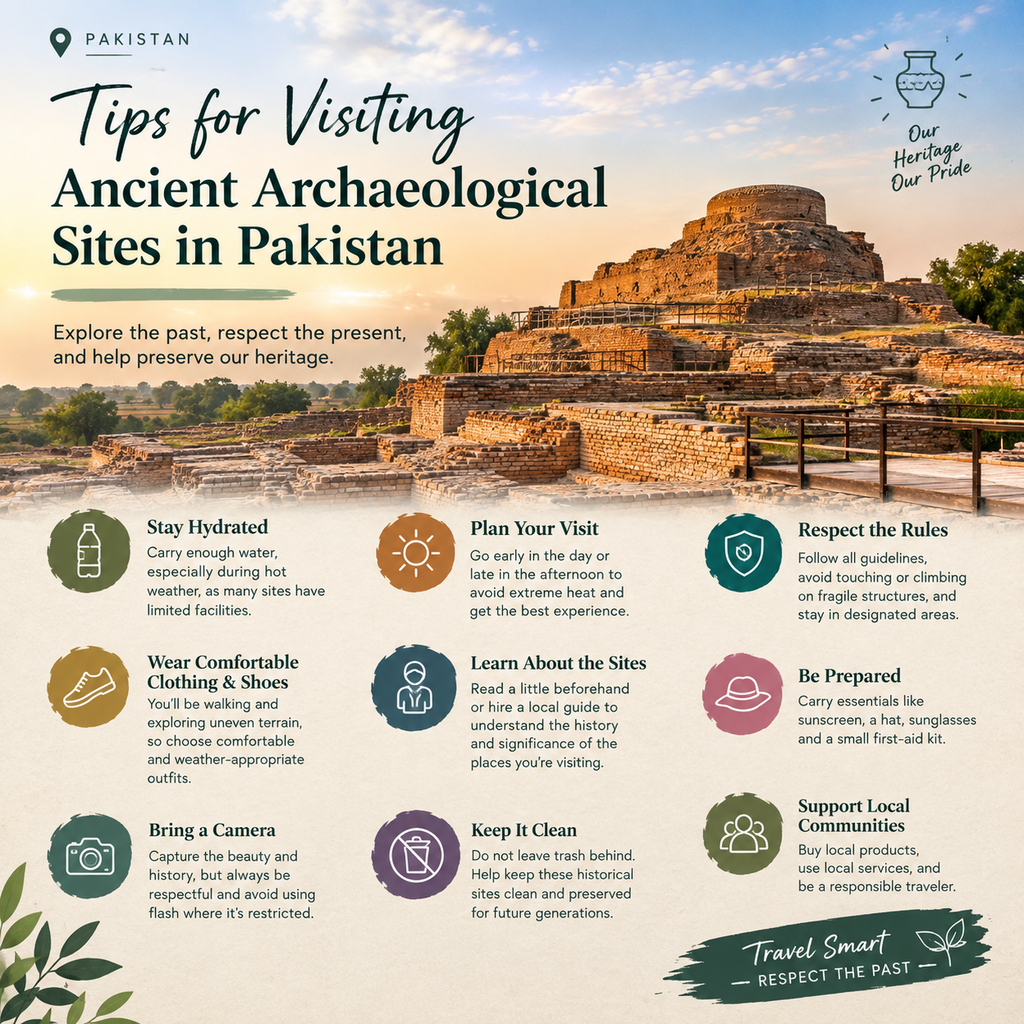
A little preparation can make the experience much more enjoyable.
- Wear comfortable walking shoes.
- Carry enough drinking water.
- Use sun protection, especially during warmer weather.
- Avoid climbing on fragile archaeological structures.
- Follow photography rules where they apply.
- Visit the associated museum when one is available.
- Consider hiring a knowledgeable local guide.
- Give yourself enough time to explore rather than rushing through the site.
- Combine archaeological visits with nearby historical or cultural attractions where practical.
- Follow local instructions and help keep the site clean.
Most importantly, remember that these are not simply tourist attractions. They are archaeological remains that have survived for centuries and require careful preservation.
Responsible tourism matters. Avoiding damage, respecting site rules, and leaving the area clean are simple ways visitors can help protect Pakistan’s heritage for future generrations.
Why the Indus Valley Civilisation Matters to Pakistan’s Heritage
The Indus Valley Civilisation forms an important part of Pakistan’s archaeological and cultural heritage.
Sites such as Mohenjo-daro and Harappa demonstrate how early urban communities developed organised settlements, craft traditions, systems of water management, and networks of exchange.
At the same time, sites such as Mehrgarh and Kot Diji show that the story began long before the rise of the major Bronze Age cities. They provide evidence of earlier communities and help researchers understand the gradual development of settled life and cultural traditions.
Rehman Dheri, Amri, and Nausharo add further regional perspectives, showing that the development of the wider Indus cultural world involved many communities across different parts of the region.
Taken together, these sites represent a long story of human development, from early farming communities to increasingly complex settlements and urban centres.
Perhaps that is what makes these places so interesting. The remains may be quiet today, but they still have a great deal to say about the people who once lived there.
Frequently Asked Questions:
What are the most important Indus Valley Civilisation sites in Pakistan?
Some of the best-known sites include Mohenjo-daro, Harappa, Mehrgarh, Kot Diji, Rehman Dheri, Amri, and Nausharo. These sites represent different periods and regional traditions connected with the development of the wider Indus cultural world.
Which is the most famous Indus Valley site in Pakistan?
Mohenjo-daro is probably the most internationally famous Indus Valley archaeological site in Pakistan. Its planned settlement, drainage system, Great Bath, wells, streets, and surviving structures make it particularly significant.
Is Harappa older than Mohenjo-daro?
The question is more complicated than simply saying that one site is older than the other. Both sites contain evidence from different phases of the broader Indus cultural tradition.
Harappa has archaeological occupation extending back before the Mature Harappan period, while Mohenjo-daro became a major urban centre during the Mature Indus phase. It is therefore more useful to understand the different stages of development at each site rather than treating them as two cities competing over which is “older.”
Why is Mehrgarh important?
Mehrgarh is important because its archaeological sequence goes back to the 8th millennium BCE. It provides evidence of early settled communities, farming, animal domestication, craft production, and changing settlement patterns long before the rise of the major Indus cities.
Can tourists visit Indus Valley archaeological sites?
Some major archaeological sites, particularly Mohenjo-daro and Harappa, can be visited by tourists. However, visitor facilities, opening hours, access arrangements, and local conditions can change, so it is sensible to check current information before travelling.
What is the best Indus Valley site to visit in Pakistan?
For a first visit, Mohenjo-daro is an excellent choice because its surviving remains give visitors a strong sense of the scale and organisation of an ancient planned city.
Harappa is another important option, particularly for travellers exploring Punjab or those who want to visit an archaeological site together with its associated museum.
Are Indus Valley sites suitable for students?
Yes. Archaeological sites such as Mohenjo-daro and Harappa can be particularly valuable for students because they allow them to see physical evidence of topics they may have studied in history or archaeology.
A visit can also become more meaningful when the archaeological site is combined with a museum or a knowledgeable guide.
What can we learn from the ruins of the Indus Valley Civilisation?
The ruins and artefacts provide clues about urban planning, architecture, craft production, trade, water management, sanitation, and everyday life.
They also help researchers understand how different communities interacted and how settled societies gradually became more complex.
Conclusion
Pakistan’s archaeological heritage reaches back thousands of years, and the remains of the Indus Valley Civilisation offer an extraordinary opportunity to explore that deep history.
Mehrgarh takes us back to some of the earliest settled communities in the region. Sites such as Kot Diji, Amri, and Rehman Dheri help us understand important stages in the development of settlements and regional cultures. Later, major urban centres such as Harappa and Mohenjo-daro demonstrate a remarkable level of organisation, craftsmanship, and urban planning.
Today, many of these ancient settlements survive only in the form of ruins and archaeological remains. Yet those remains still tell us a great deal.
The streets, houses, pottery, tools, wells, seals, and drainage systems provide glimpses into the lives of people who lived thousands of years ago. They remind us that the landscapes we know today were once home to communities with their own routines, skills, ambitions, and ways of understanding the world.
Exploring the Indus Valley Civilisation sites in Pakistan is therefore more than a visit to a group of ancient ruins. It is a journey into one of the earliest chapters of urban and settled life in South Asia and an opportunity to see a part of Pakistan’s history that has survived for thousands of years.