
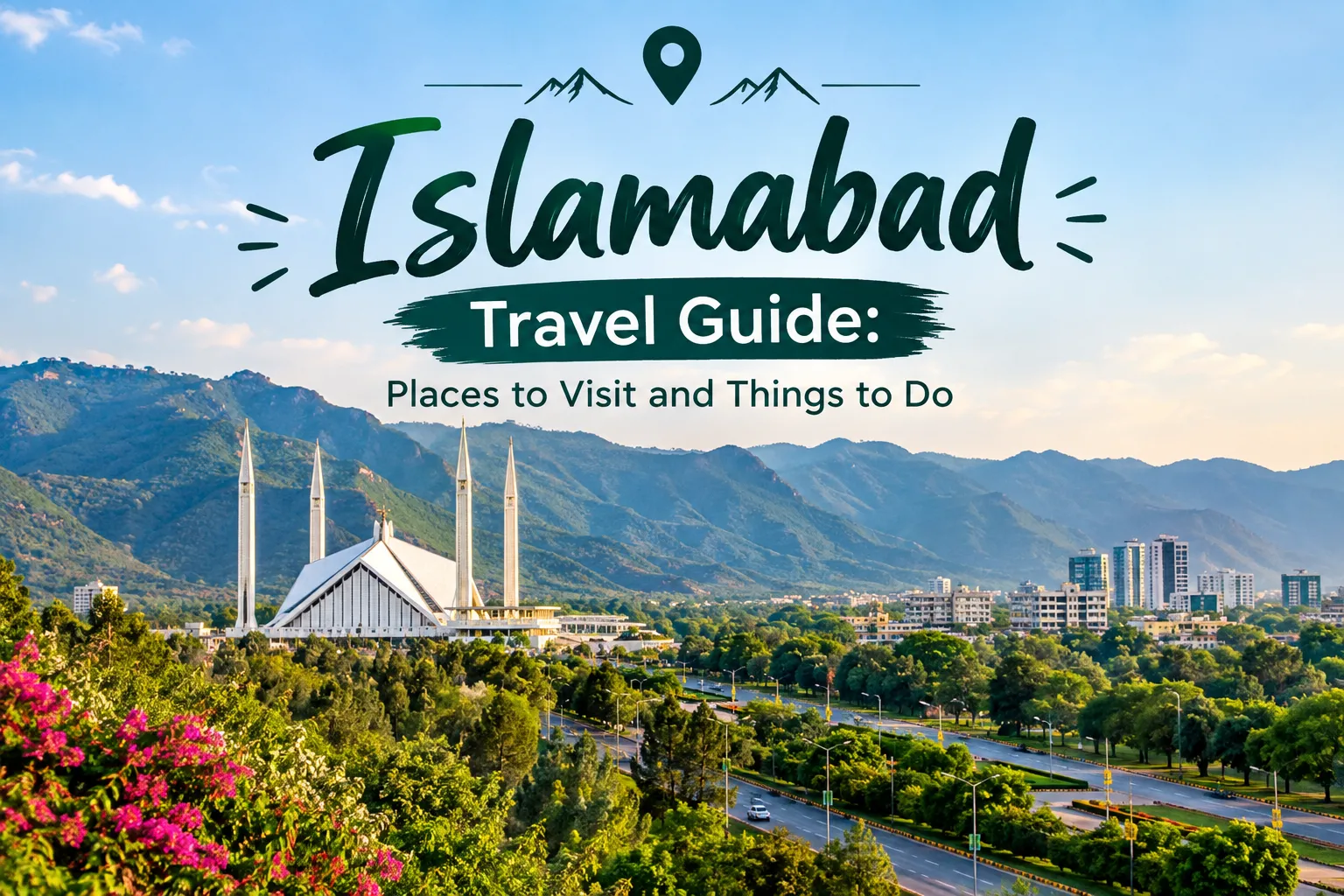
Islamabad has a different character from most other major cities in Pakistan. The city is spacious, green, and relatively peaceful, with the Margalla Hills rising behind it. Wide roads, parks, museums, viewpoints, historic places, and quiet corners give visitors plenty of ways to spend a few days without feeling that they have to rush from one attraction to another.
Although Islamabad is known mainly as the capital of Pakistan, there is much more to the city than government buildings and diplomatic areas. You can visit one of the country’s most recognisable mosques in the morning, explore a cultural museum in the afternoon, walk through a historic village later in the day, and finish the evening with a view of the city from the hills.
The city was selected as Pakistan’s new capital in the late 1950s and officially became the capital in 1963. Its location on the Potohar Plateau, beside the Margalla Hills, is one of the main reasons Islamabad has such a distinctive setting.
Whether you are visiting for a weekend, travelling with family, interested in history, or simply looking for a relaxed city break, Islamabad has enough variety to make the trip worthwhile.
This guide covers the Islamabad travel guide essentials, including the best places to visit, things to do, suggested itineraries, the best time to go, and practical tips for planning your stay.
Quick Overview of Islamabad:
Before getting into the individual attractions, here is a quick look at what you can expect from the city:
| Travel Detail | Information |
| City | Islamabad |
| Country | Pakistan |
| Known for | Margalla Hills, Faisal Mosque, greenery, museums and cultural attractions |
| Best for | Families, couples, history lovers, nature lovers and first-time visitors |
| Ideal stay | 2–3 days for a relaxed first visit |
| Popular outdoor activity | Hiking in the Margalla Hills |
| Popular cultural attractions | Lok Virsa, Pakistan Monument and Museum |
| Popular viewpoints | Daman-e-Koh and Pir Sohawa |
| Nearby heritage destination | Taxila |
| Nearby city | Rawalpindi |
Why Visit Islamabad?
One of the best things about Islamabad is that different types of travellers can enjoy the city in very different ways.
If you like nature, the Margalla Hills and the city’s parks provide plenty of outdoor space. If history interests you, places such as Shah Allah Ditta and the Pakistan Monument offer opportunities to learn more about the region and the country. Culture lovers can spend time at Lok Virsa, while families can choose from parks, museums, viewpoints, and recreational areas.
The city’s official tourism listings include attractions such as Faisal Mosque, Pakistan Monument, Rawal Lake, Shakarparian, Lok Virsa, Margalla Hills, Daman-e-Koh, and several parks and museums.
Islamabad is also a convenient starting point for travellers heading towards northern Pakistan. Its location makes it possible to combine a city stay with trips towards places such as Taxila, Murree, or other northern destinations.
Best Places to Visit in Islamabad:
1. Faisal Mosque
Faisal Mosque is easily one of the first places most visitors want to see.
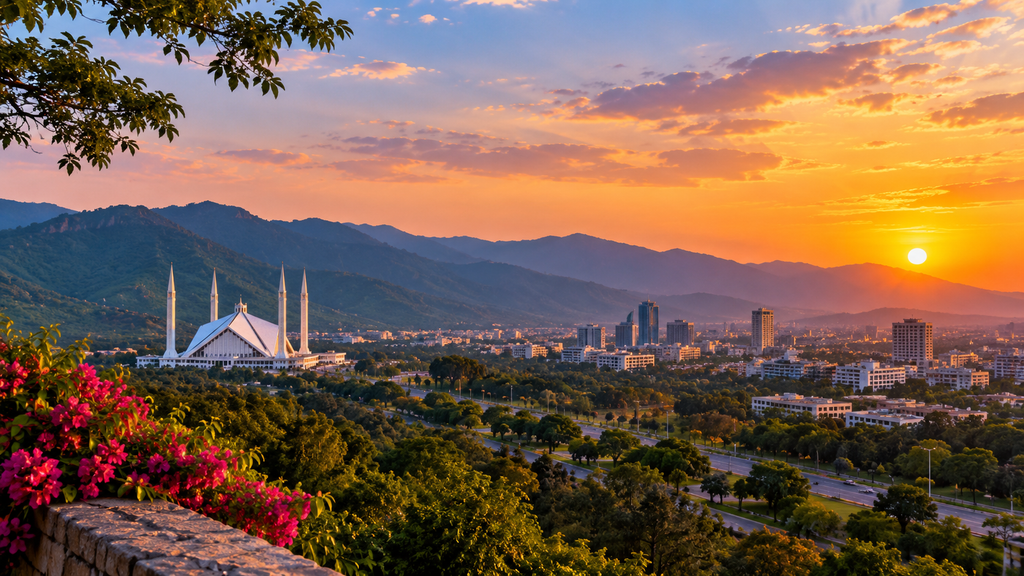
Set at the foot of the Margalla Hills, the mosque has a distinctive contemporary design inspired by a Bedouin tent. Its four tall minarets and large prayer hall give it a striking appearance, especially when viewed with the mountains behind it.
The surrounding area is spacious, so visitors can appreciate the architecture from different angles. Early morning and late afternoon are particularly pleasant times for photography and sightseeing.
Because the mosque is an active place of worship, visitors should dress modestly and behave respectfully. During prayer times and religious occasions, access arrangements may differ.
Best for: Architecture, photography, families, religious tourism, and first-time visitors.
2. Pakistan Monument and Pakistan Monument Museum
The Pakistan Monument stands on the Shakarparian Hills and has become one of the most recognisable landmarks in the capital.
Its large petal-shaped structure represents the unity of Pakistan’s provinces and territories. The monument is also connected with the country’s national history and cultural identity.
The nearby Pakistan Monument Museum makes the visit more meaningful because visitors can spend time learning about important events, personalities, and stages of Pakistan’s history rather than simply taking photographs outside.
It is easy to combine the monument with Lok Virsa and Shakarparian, making the area a useful stop for a half-day cultural itinerary.
Best for: History lovers, students, families, architecture enthusiasts, and photographers.
3. Lok Virsa Heritage Museum:
For anyone interested in Pakistani culture, Lok Virsa is one of the most worthwhile places to include in a visit.
The museum focuses on folk and traditional heritage from different parts of Pakistan. Its collections include traditional clothing, jewellery, crafts, woodwork, and other examples of regional culture. The CDA describes Lok Virsa as a centre dedicated to preserving Pakistan’s folk and traditional culture.
What makes the museum particularly useful for travellers is the opportunity to see the cultural diversity of the country in one place. If you are not able to travel to every province, Lok Virsa offers a small window into many of those traditions.
It is also a good stop for families and students because the displays can make abstract ideas about culture and heritage much easier to understand.
Best for: Culture lovers, students, families, international visitors, and heritage enthusiasts.
4. Daman-e-Koh:
Daman-e-Koh is one of the easiest places to visit when you want a panoramic view of Islamabad.
Located in the Margalla Hills, the viewpoint looks across the capital and is particularly attractive around sunset and after dark when the city lights begin to appear. The National Tourism Portal describes it as a popular recreational viewpoint with views towards landmarks including Faisal Mosque and Rawal Lake.
You do not need to be an experienced hiker to enjoy Daman-e-Koh. It is a good choice for families and visitors who want mountain scenery without spending several hours on a trail.
Take your time here. The view is the main attraction, and there is no real reason to rush away after taking a few photographs.
Best for: Families, couples, photographers, sunset views, and relaxed sightseeing.
5. Saidpur Village:
Saidpur Village is one of the more interesting places to visit when you want to see a different side of the capital.
Located near the Margalla Hills, the historic village has traditional architecture, cultural features, small shops, eateries, and places of historical interest. The CDA describes it as a cultural and historical attraction with traditional character, handicrafts, and restaurants.
It is particularly enjoyable when explored slowly. Walk through the village, look at the older structures, stop for tea or a meal, and take in the surroundings instead of treating the visit as a quick photo stop.
Saidpur can also be paired easily with Daman-e-Koh, making both places part of the same outing.
Best for: Culture, food, photography, families, and relaxed walks.
6. Shakarparian Hills:
Shakarparian is another pleasant place to include in a sightseeing itinerary, especially if you are already visiting the Pakistan Monument and Lok Virsa.
The hills have historical significance and are known for their greenery and panoramic views of Islamabad. The CDA notes that the area is around 609 metres above sea level and has trees associated with visiting heads of state.
It is not a place where you need to spend an entire day. Instead, it works well as a relaxed stop between other attractions.
Best for: Families, casual walks, photography, and short sightseeing visits.
7. Margalla Hills National Park:
The Margalla Hills are one of the main reasons Islamabad feels so different from many other large cities.
The hills provide opportunities for hiking, nature walks, birdwatching, photography, and wildlife observation. The CDA lists several established hiking trails, including Trails 1, 2, 3, 4, 5, and 6.
Trail 3 is particularly well known and can be challenging in places because of its steep sections. Trail 5 is generally considered another popular option, while Trail 6 offers a route beginning near Faisal Mosque.
If you plan to hike, choose the trail according to your fitness level rather than simply selecting the most famous one. Carry enough water, wear proper shoes, start early, and check weather conditions before setting out.
Best for: Hikers, nature lovers, photographers, adventure travellers, and active families.
8. Rawal Lake and Lake View Park:
Rawal Lake provides a quieter outdoor experience within the capital.
The surrounding recreational areas are suitable for families who want to spend some time outdoors without going on a long hike. Lake View Park adds walking areas, recreational facilities, and opportunities for activities around the lake. The CDA lists boating, fishing, paddle boating, walking trails, play areas, and food stalls among the area’s attractions.
The area is particularly useful when you want a slower afternoon after a busy morning of sightseeing.
During hotter months, an early morning or late afternoon visit is generally more comfortable than spending the middle of the day outdoors.
Best for: Families, picnics, outdoor relaxation, and casual photography.
9. Shah Allah Ditta Caves:
Shah Allah Ditta offers a glimpse into the much older history of the area around Islamabad.
The caves and surrounding landscape contain remains associated with earlier periods, including Buddhist heritage. The CDA notes that the area contains relics and murals associated with the Buddhist period and describes the caves as having been used by Buddhist monks, Hindu ascetics, and later Muslim ascetics.
The setting is quite different from the modern parts of Islamabad. That contrast is part of the attraction: within a relatively short distance from the capital’s modern roads and buildings, visitors can encounter a landscape connected with centuries of history.
Visitors should treat the caves and historical remains carefully and follow any local instructions regarding access and preservation.
Best for: History lovers, archaeology enthusiasts, photographers, and heritage travellers.
10. Rose and Jasmine Garden:
For visitors who prefer a peaceful walk rather than another major sightseeing attraction, the Rose and Jasmine Garden can be a pleasant addition to the itinerary.
The garden is known for its flowers, landscaped surroundings, and quiet atmosphere. It is particularly suitable for families, casual visitors, and anyone who wants to spend some time outdoors without hiking.
The garden is also listed among Islamabad’s public recreational attractions by the CDA and ICT Administration.
Best for: Families, nature lovers, photography, and relaxed walks.
Things to Do in Islamabad:
- Seeing the famous landmarks is only one part of the experience. Give yourself some time to enjoy the city rather than turning the entire trip into a checklist.
- Go Hiking in the Margalla Hills
- For active travellers, hiking is one of the best ways to experience the natural side of the capital.
- There are several trails, with different levels of difficulty and length. Trail 3 is one of the most famous routes, while Trail 5 provides another popular option.
- A morning hike followed by breakfast or lunch in the city can make for a very enjoyable day.
Explore Islamabad’s Museums:
- The capital has several museums and cultural institutions worth visiting.
- Lok Virsa is ideal for traditional culture, while the Pakistan Monument Museum focuses more closely on national history. The Pakistan Museum of Natural History is another option for visitors interested in science, wildlife, and the natural world. These museums are also useful alternatives when the weather is not suitable for outdoor sightseeing.
Enjoy a View of the City:
- Daman-e-Koh is the most obvious choice, but the Margalla Hills offer several places where you can stop and appreciate the capital from above.
- The view changes with the weather and time of day. On a clear evening, the city lights spread out below the hills, creating a very different atmosphere from the daytime view.
Spend an Evening in Saidpur Village:
- Saidpur is best enjoyed without a strict schedule.
- Walk through the village, explore its traditional character, stop for something to eat, and spend some time looking at the surrounding hills.
- It can be a particularly pleasant way to end a day after visiting Daman-e-Koh or another nearby attraction.
Try Local Food:
- Islamabad has a wide range of restaurants and cafés, but visitors should make room for some Pakistani food during their stay.
- Depending on your preference, you can try dishes such as karahi, kebabs, biryani, nihari, traditional breakfasts, or regional specialities.
- There is no need to turn every meal into a restaurant search. Sometimes a simple local meal after a day of walking is one of the nicest parts of the trip.
Islamabad for Families:
Islamabad is a practical choice for families because there is a good mix of parks, museums, viewpoints, cultural attractions, and outdoor spaces.
Younger children may enjoy Lake View Park, gardens, and open spaces, while older children and teenagers can be more interested in museums, hiking trails, viewpoints, and historical sites.
A family itinerary does not need to be packed. A simple day might look like this:
| Time | Activity |
| Morning | Faisal Mosque |
| Late morning | Pakistan Monument |
| Afternoon | Lok Virsa or another museum |
| Late afternoon | Rest / lunch |
| Evening | Saidpur Village or Daman-e-Koh |
This gives everyone some breathing room and avoids spending the whole day travelling between attractions.
Islamabad for History and Culture Lovers:
- The modern capital is only one part of Islamabad’s story.
- The surrounding area has a much older history, and places such as Shah Allah Ditta and Saidpur provide glimpses into earlier communities and traditions. Lok Virsa focuses on the cultural heritage of Pakistan’s different regions, while the Pakistan Monument and Museum provide a national historical perspective.
- If you have more time, Islamabad also makes a convenient base for a trip to Taxila, where visitors can explore the archaeological heritage of the Gandhara region.
- This combination of modern city life, natural landscapes, and older cultural layers makes the capital particularly interesting for heritage travellers.
A Simple 2-Day Islamabad Itinerary:
You can see many of the major attractions over two days without rushing.
Day 1 – Landmarks and Culture:
Morning
- Faisal Mosque
- Daman-e-Koh
Afternoon
- Lunch
- Pakistan Monument
- Pakistan Monument Museum
- Lok Virsa
Evening
- Saidpur Village
- Dinner
Day 2 – Nature and Relaxation:
Morning
- Margalla Hills hiking trail
Afternoon
- Lunch and rest
- Rawal Lake or Lake View Park
Evening
- Cafe or relaxed dinner
If hiking is not suitable for your group, replace it with a museum, garden, or another cultural attraction.
Best Time to Visit Islamabad:
Islamabad can be visited throughout the year, but different seasons offer different experiences.
Spring:
Spring is a pleasant period for gardens, outdoor walks, and sightseeing. The city’s greenery makes outdoor activities particularly enjoyable.
Summer:
Summer can be hot and humid, especially during the daytime. If you visit during this period, plan hiking and other outdoor activities for early morning or late afternoon.
Autumn:
Autumn offers comfortable conditions for sightseeing and spending time around the Margalla Hills.
Winter:
Winter brings cooler weather and is often a good period for daytime sightseeing and hiking. Evenings can be cold, so bring suitable clothing.
Islamabad also receives monsoon rainfall, which can affect hiking conditions and outdoor plans. Checking the forecast before heading into the hills is a sensible habit. The CDA notes hot summers, monsoon rains, and cold winters as characteristic features of the city’s climate.
How Many Days Do You Need in Islamabad?
- For a first visit, two days are enough to see many of the main attractions.
- Three days would be more comfortable if you want to include hiking, museums, Shah Allah Ditta, Saidpur Village, or a nearby day trip.
- If you are using Islamabad as part of a longer Pakistan itinerary, even one full day can give you a useful introduction to the city. The important thing is to choose your priorities instead of trying to see everything.
Practical Travel Tips:
Start outdoor activities early:
Hiking and sightseeing are more comfortable during the cooler parts of the day, particularly in summer.
Wear comfortable shoes:
Even a normal sightseeing itinerary involves quite a bit of walking.
Carry water:
- Keep water with you when visiting viewpoints, parks, and especially hiking trails.
- Dress appropriately at religious sites
- Faisal Mosque is an active place of worship. Dress modestly and follow any instructions given to visitors.
Check hiking conditions:
Weather can change quickly in the hills. Check conditions before starting a trail and avoid hiking during unsuitable weather.
Keep the city clean:
Do not leave plastic bottles, food packaging, or other waste behind. Islamabad’s greenery and natural areas are a major part of its appeal.
Keep your itinerary flexible:
You do not need to plan every hour. Leaving some free time makes it easier to deal with traffic, weather changes, tired children, or simply finding a place you want to stay a little longer.
Places to Visit Near Islamabad:
If you have an extra day, there are several destinations within reasonable reach of the capital.
| Destination | Why Visit |
| Taxila | Ancient archaeology and Gandhara heritage |
| Rawalpindi | Historic markets, old neighbourhoods and local city life |
| Khanpur | Lake scenery and outdoor activities |
| Murree | Mountain views and cooler weather |
| Shahdara | Nature, greenery and a quieter escape |
Taxila is particularly worthwhile for history lovers because the area contains major archaeological remains and museums connected with Gandhara heritage.
Best Places in Islamabad by Interest:
Not every traveller wants the same kind of holiday, so here is a quick way to choose where to go:
| If You Enjoy | Consider Visiting |
| History | Pakistan Monument, Shah Allah Ditta, Lok Virsa |
| Architecture | Faisal Mosque, Pakistan Monument |
| Nature | Margalla Hills, Rawal Lake |
| Hiking | Margalla Hills trails |
| Culture | Lok Virsa, Saidpur Village |
| Photography | Daman-e-Koh, Faisal Mosque, Pakistan Monument |
| Family outings | Lake View Park, Daman-e-Koh, museums |
| Peaceful walks | Rose and Jasmine Garden, Shakarparian |
| Day trips | Taxila, Khanpur, Murree |
Frequently Asked Questions:
What are the best places to visit in Islamabad?
Faisal Mosque, Pakistan Monument, Lok Virsa, Daman-e-Koh, Saidpur Village, Shakarparian, Rawal Lake, and the Margalla Hills are among the city’s most popular attractions.
Is Islamabad worth visiting?
Yes. The city offers a combination of natural scenery, architecture, museums, cultural attractions, parks, hiking trails, and historic places. Its setting beside the Margalla Hills is one of its biggest advantages.
How many days are enough for Islamabad?
Two days are enough for many of the main attractions. Three days give you more time for hiking, museums, Saidpur Village, Shah Allah Ditta, and a possible day trip.
What is Islamabad famous for?
Islamabad is particularly known for Faisal Mosque, the Margalla Hills, its green spaces, Pakistan Monument, museums, planned layout, and relatively peaceful atmosphere.
Is Islamabad suitable for families?
Yes. Families can choose from museums, parks, gardens, viewpoints, cultural attractions, and outdoor activities. The city also allows families to keep their schedule flexible.
Where can I go hiking in Islamabad?
The Margalla Hills have several established hiking trails, including Trails 1 through 6. Trail 3 is one of the best-known routes, while Trail 5 is another popular option. Choose according to your fitness level and check conditions before setting out.
What is the best time to visit Islamabad?
Spring and autumn are comfortable for outdoor sightseeing. Winter is also suitable for daytime exploration and hiking, while summer is better managed by planning outdoor activities during the cooler parts of the day.
Conclusion:
Islamabad can seem quiet at first, especially compared with the energy of cities such as Lahore or Karachi. But that quietness is actually part of its charm.
Give yourself a little time here and the city starts to reveal more of its character. There are the Margalla Hills in the background, historic places tucked away from the main roads, museums that introduce you to Pakistan’s diverse heritage, and viewpoints where you can simply sit and watch the city below.
You do not need a long list of attractions to enjoy the capital. A morning at Faisal Mosque, an afternoon exploring the Pakistan Monument and Lok Virsa, and an evening around Saidpur or Daman-e-Koh can already make a satisfying trip.
For first-time visitors, two or three days are usually enough to experience the main highlights. If you have more time, slow down and explore some of the less obvious places as well.
The best part of visiting Islamabad is that you can move between city life, history, culture, and nature without having to travel very far. That balance is what gives the capital its own character and what makes it worth adding to a Pakistan travel itinerary.